Four seasons, the same forest
The same log circle, the same oak, the same path. Only the light, the weather and what the children hold in their hands change.
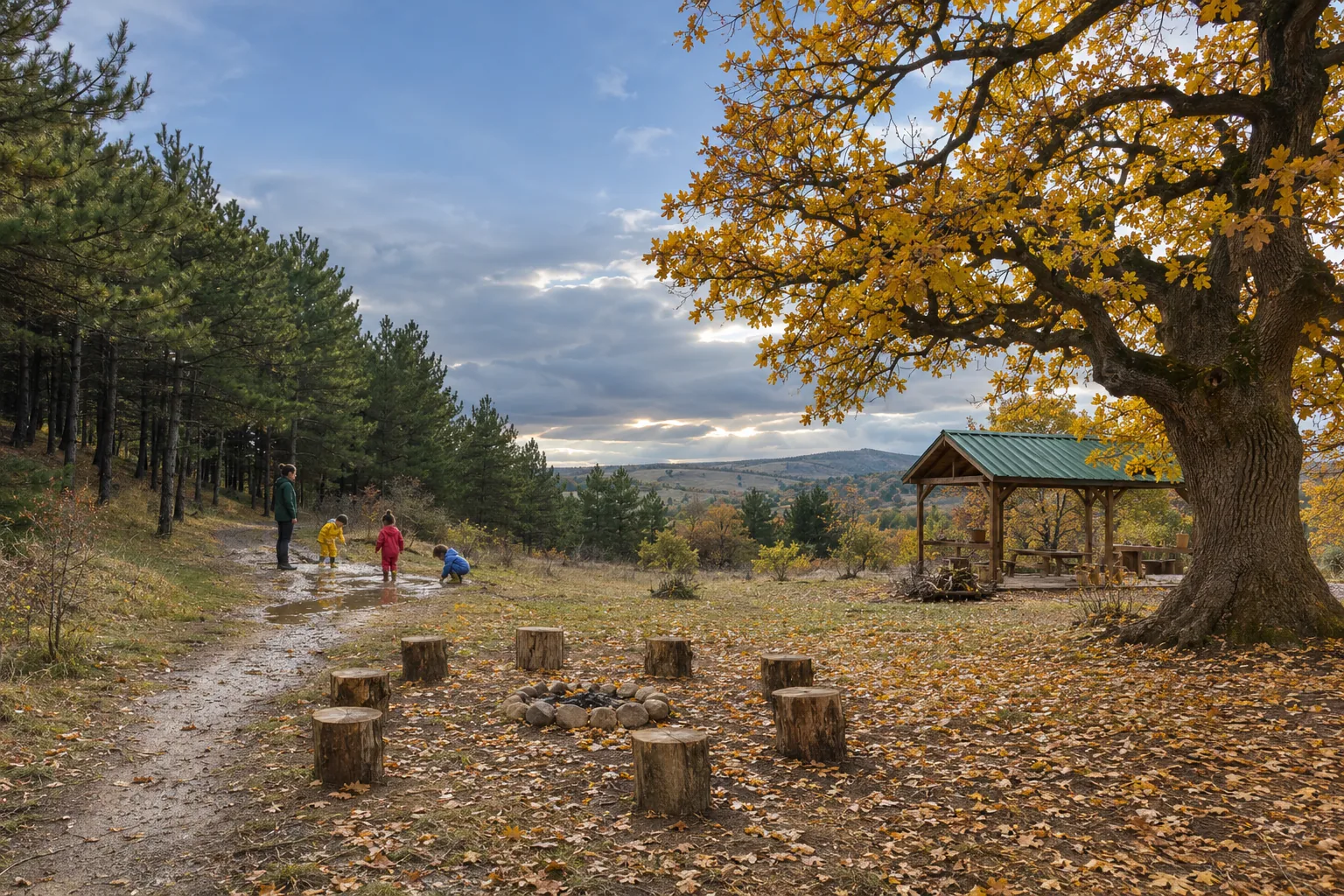
Leaves, the first rain and mud at its finest.
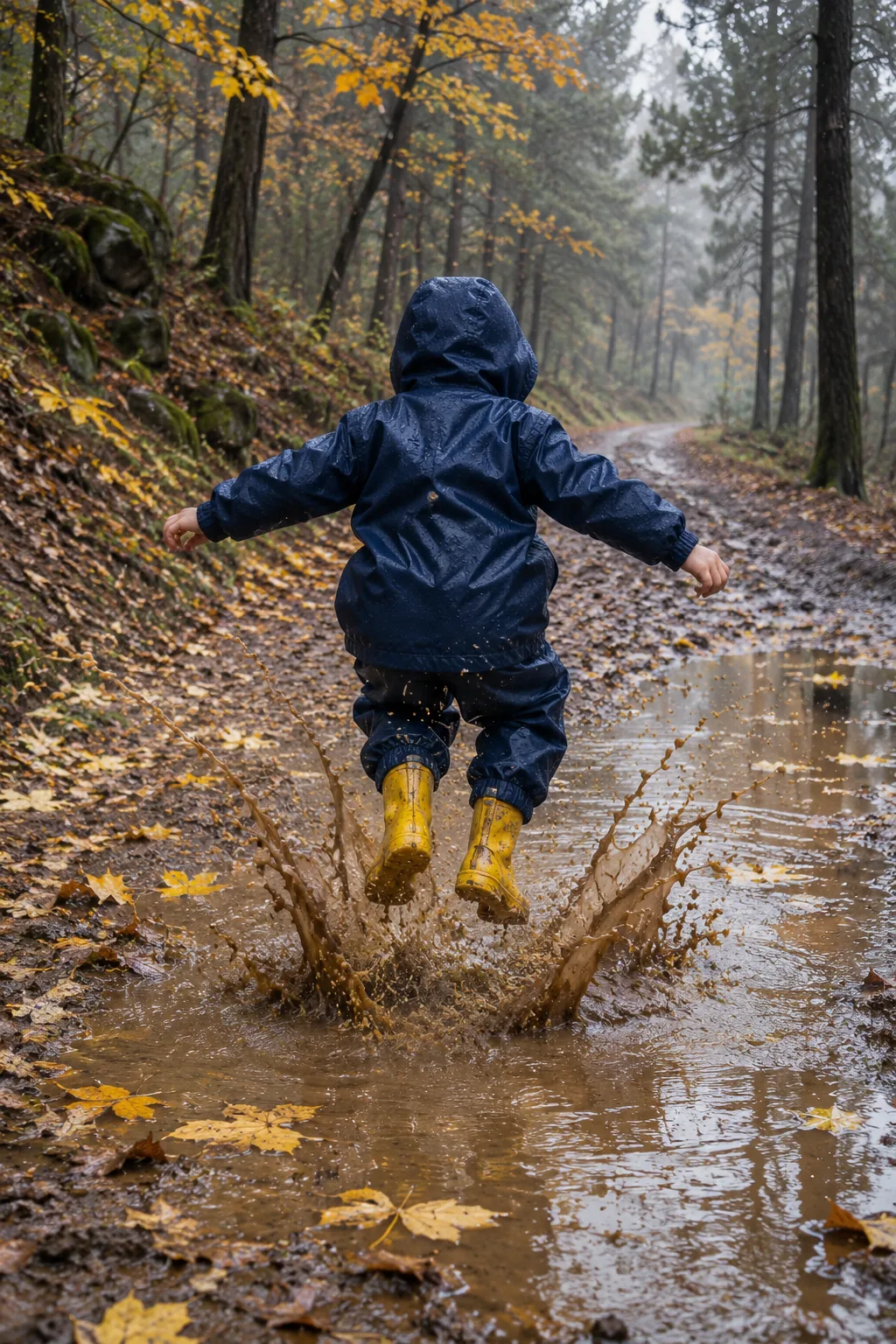
The school year starts in autumn and the forest opens its door at its most generous. The oak turns gold, cones gather under the black pines and after the first rain the path fills with puddles. In September the groups get to know the grounds: which tree we gather under, where the boundary is, what we do when we hear the whistle. By November the children put on their rain suits and take off their boots by themselves.
- Temperature4° / 18 °C
- Outdoors09:30–12:00 and 15:45–16:30
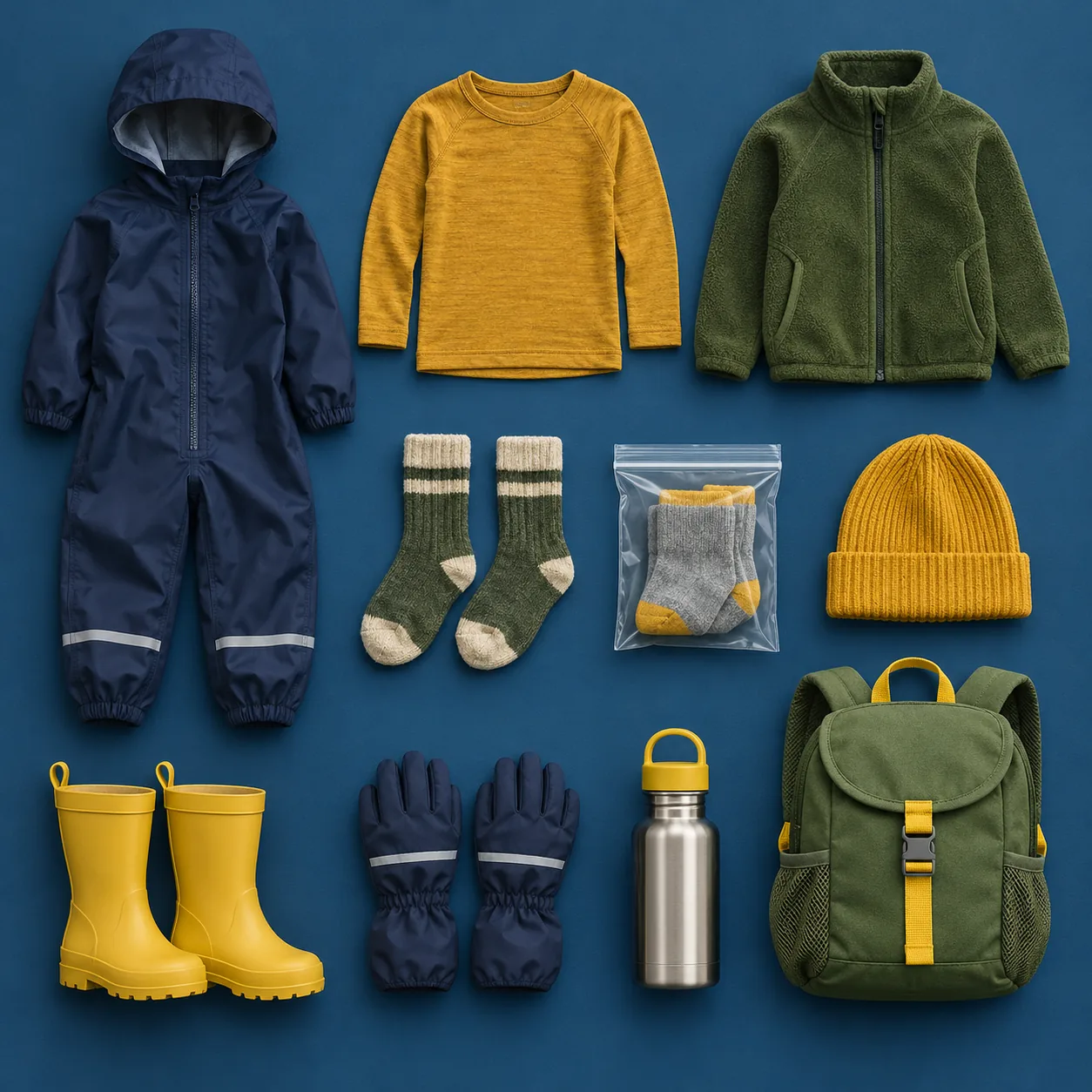
Cool mornings, mild afternoons; rain arrives suddenly. A rain suit and spare socks should be in the bag every day.
Autumn in the forest
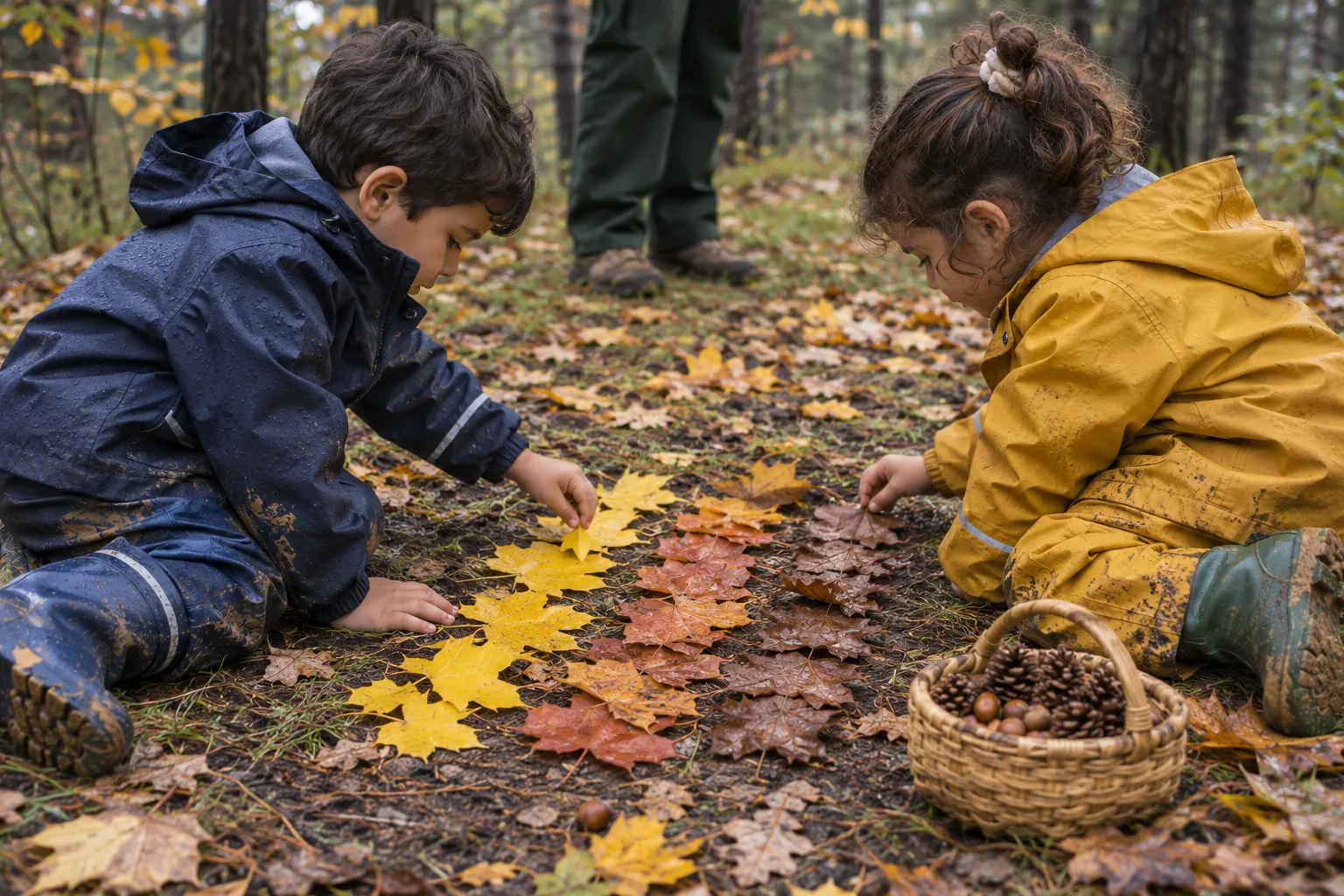
- Leaf archiveWe sort leaves by colour and shape, dry them and build our own archive.
- Puddle scienceWhich puddle is deeper? We measure with sticks, throw stones and count the rings.
- Cone countWe collect black pine cones and lay them out in groups of ten.
- First fire circleAround a small fire lit by a teacher we learn safe distance; linden tea brews.
- Bird migrationWith binoculars we watch storks and cranes pass and mark them in our book.
- Seed huntWe save acorns and rosehip seeds for spring.
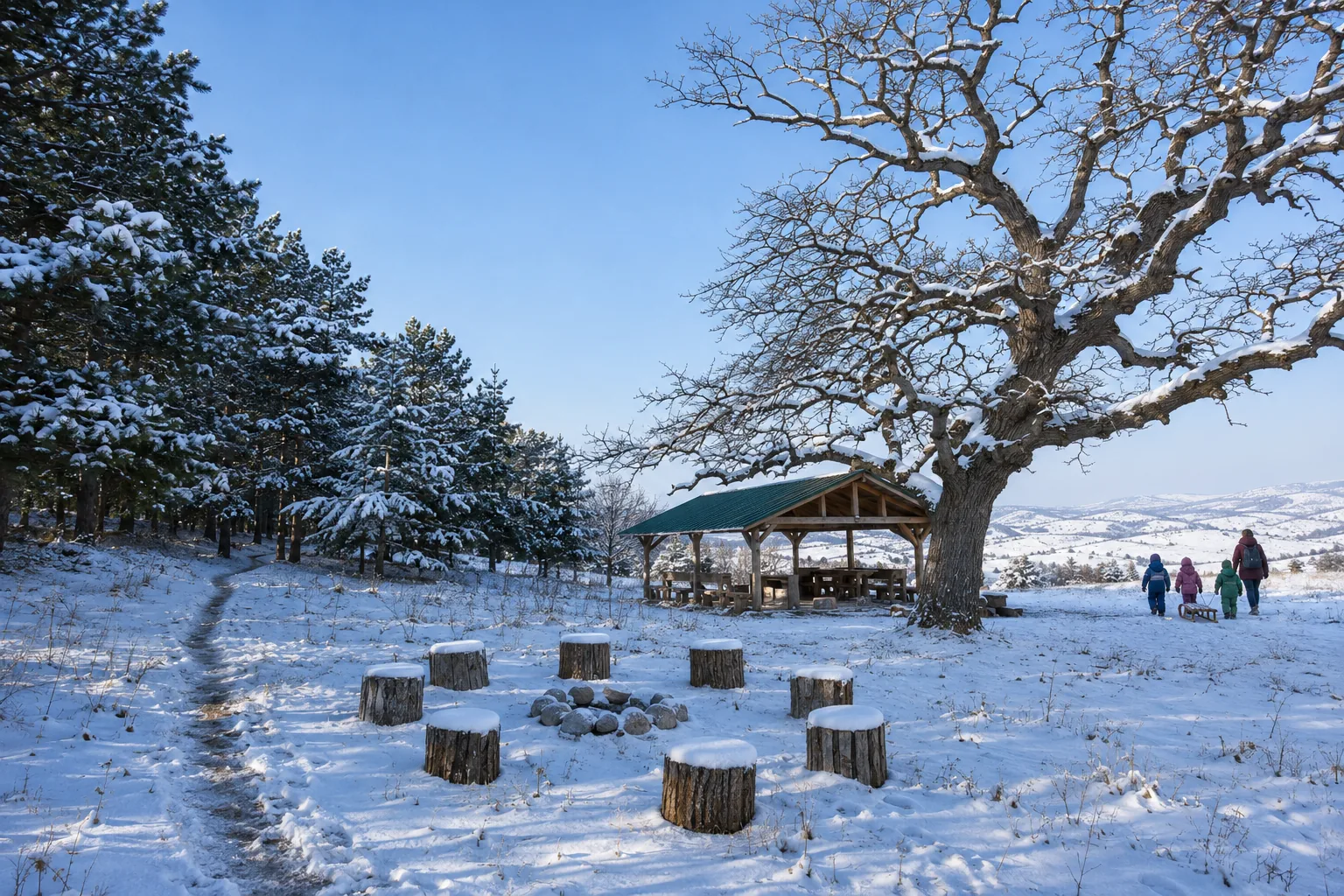
Tracking in the snow, steaming linden tea and long shadows.
Ankara's winter is dry and cold; when it snows the forest falls silent and every track becomes readable. In winter we adjust our time outside to the weather: on a sunny, still day we are out until noon; when the wind chill nears minus ten we do short rounds and warm up in the shelter. What winter really teaches is listening to your body: a child who is cold learns to say so, and a teacher learns to ask.
- Temperature−6° / 6 °C
- Outdoors10:00–11:45 and 14:30–15:30
If the wind chill drops below −10 °C or there is a strong wind warning, we shorten outdoor time. A thermal base layer, thick socks and two pairs of gloves are a must.
Winter in the forest
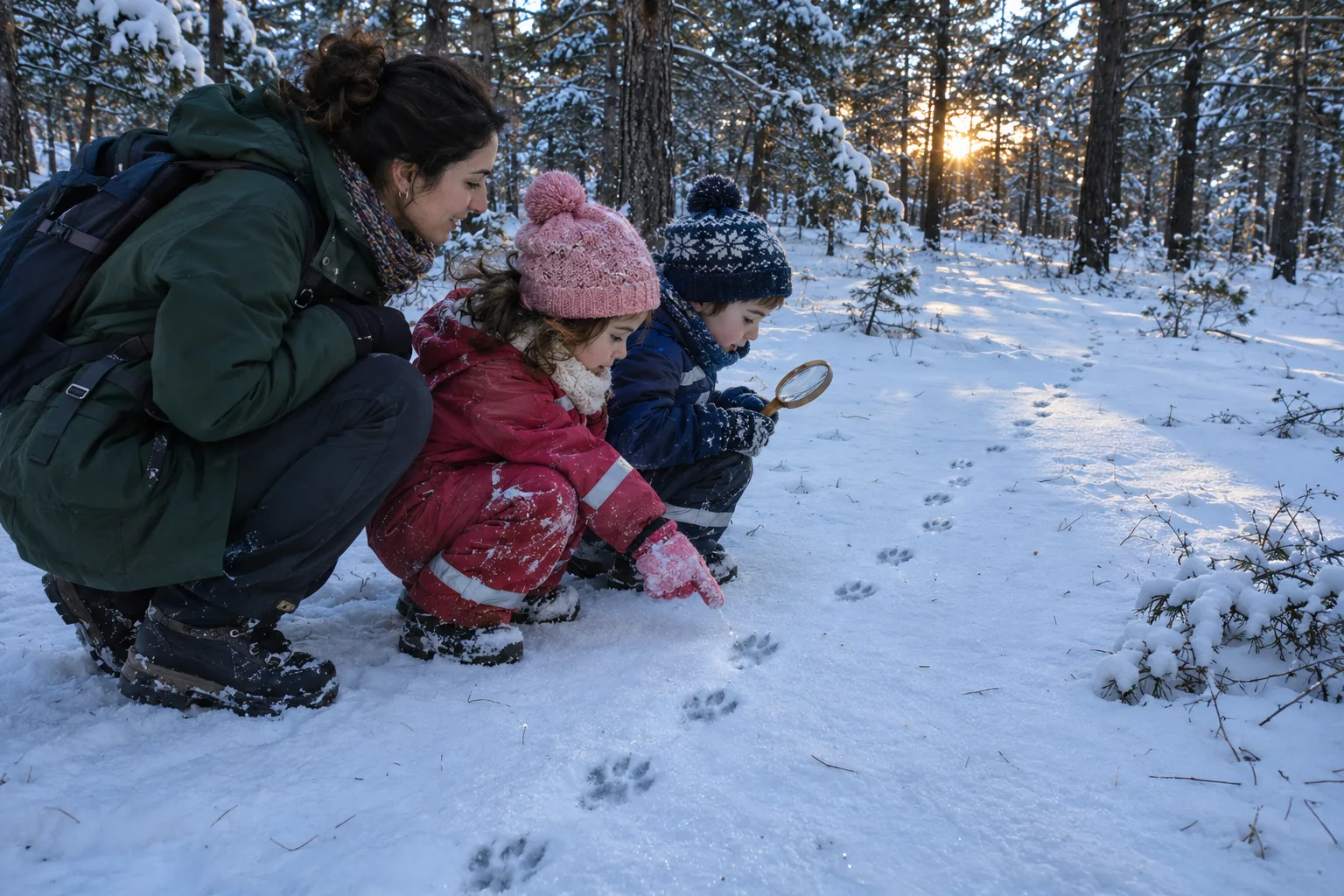
- TrackingFox, hare, crow: we work out whose tracks are in the snow and follow them.
- Ice experimentsWe leave water in a tray overnight; coloured ice shapes swing from branches.
- Sledge slopeOn the slope behind the school, one at a time, with a teacher watching.
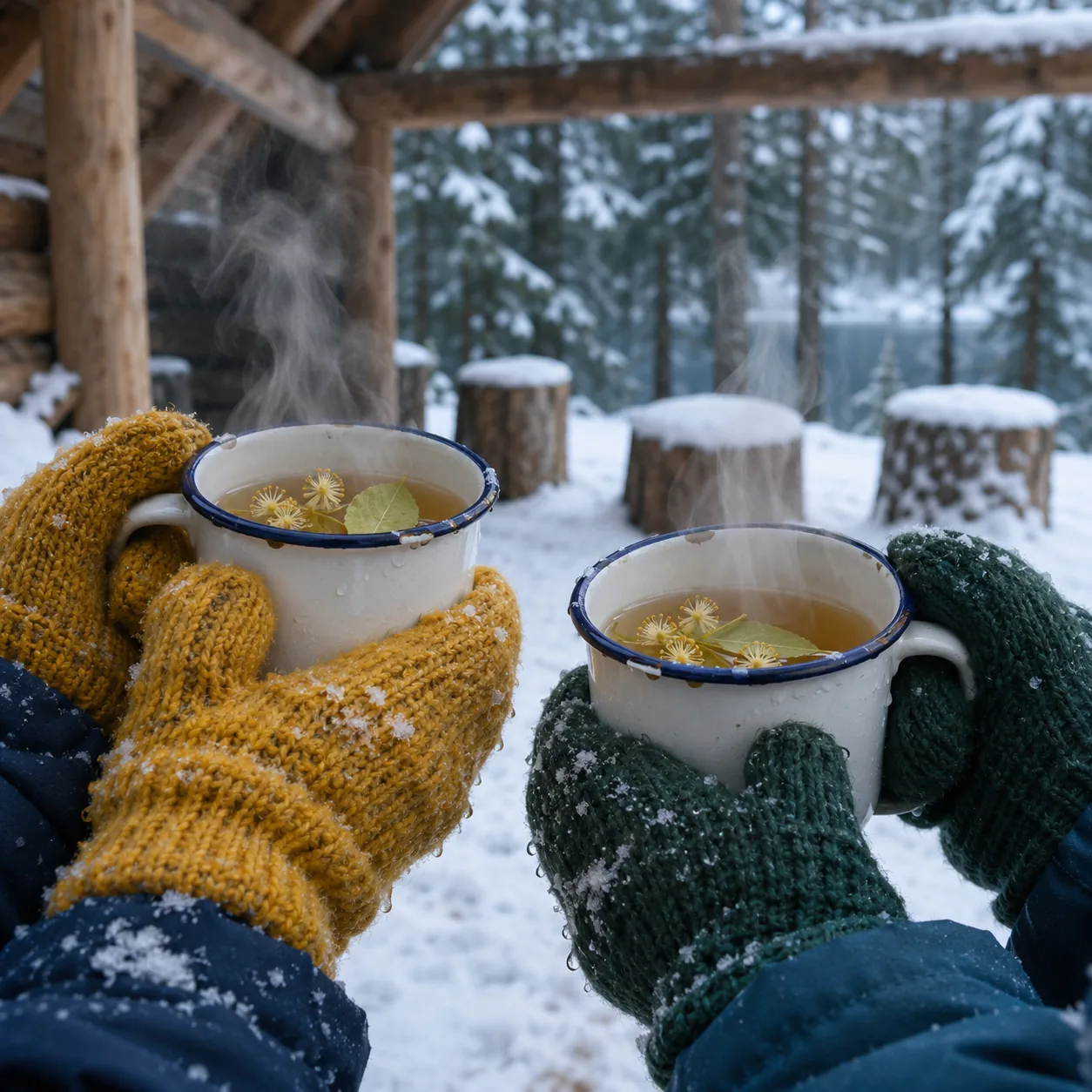
- Stories in the shelterLinden tea and a long story under the tarp while snow falls outside.
- Bird feedersWe spread suet and seeds on cones and hang them up; each morning we check who came.
- The longest nightA lantern walk with families on the winter solstice.
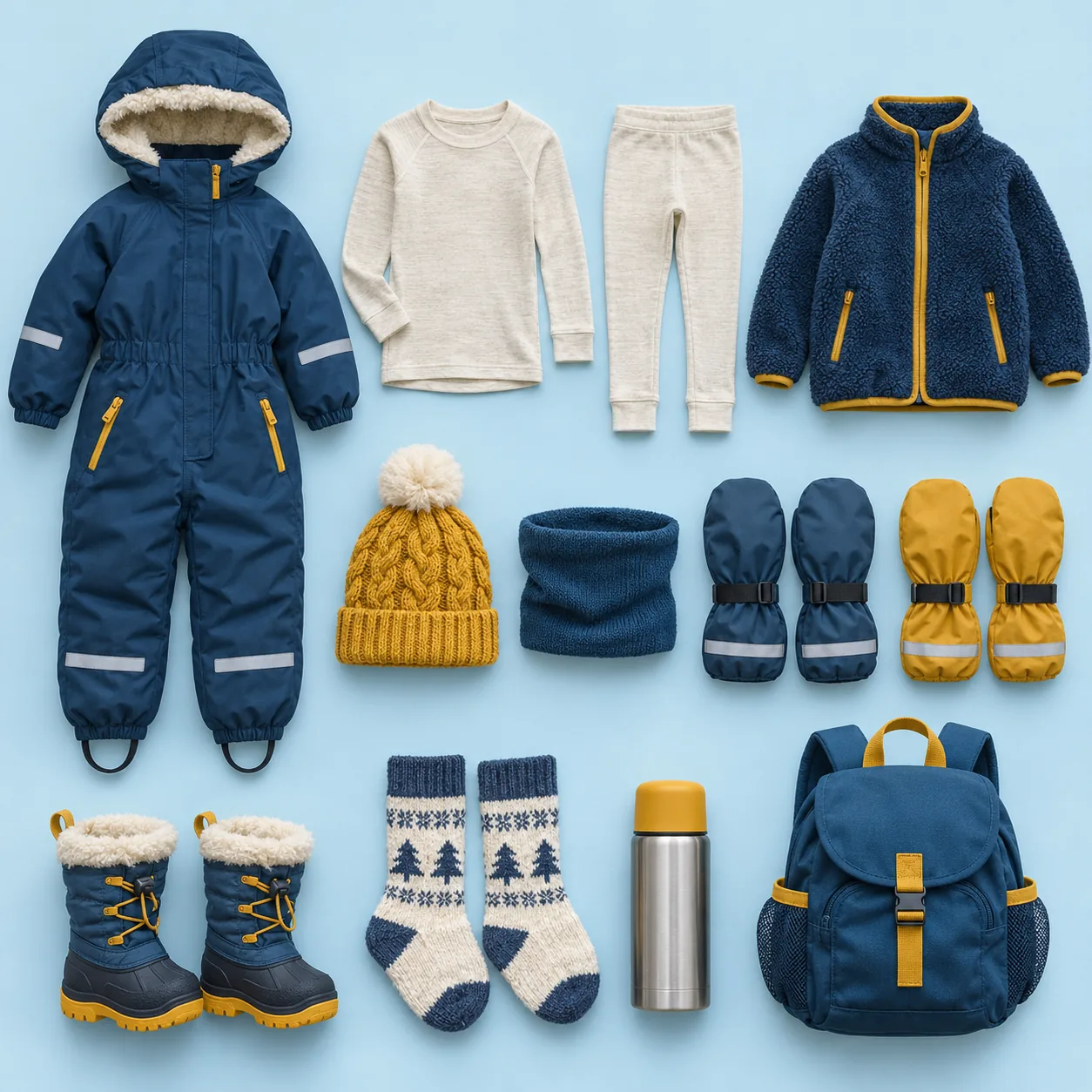
The Winter bag
- Thermal leggings
- Thick fleece or wool cardigan
- Snow suit (waterproof, insulated)
- Waterproof winter boots
- Wool hat and neck warmer
- Two pairs of waterproof gloves
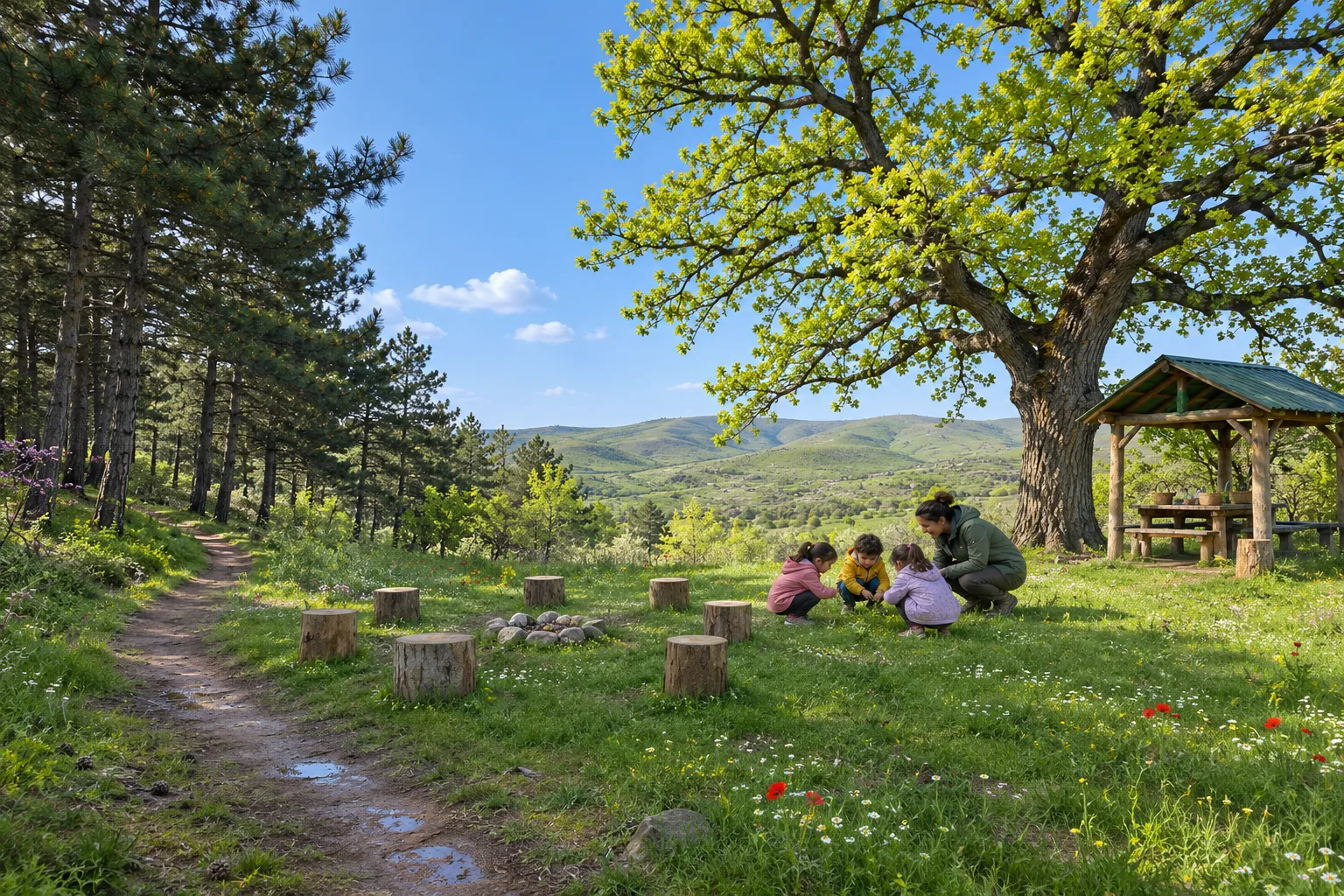
Seedlings, tadpoles and days that grow a little longer each day.
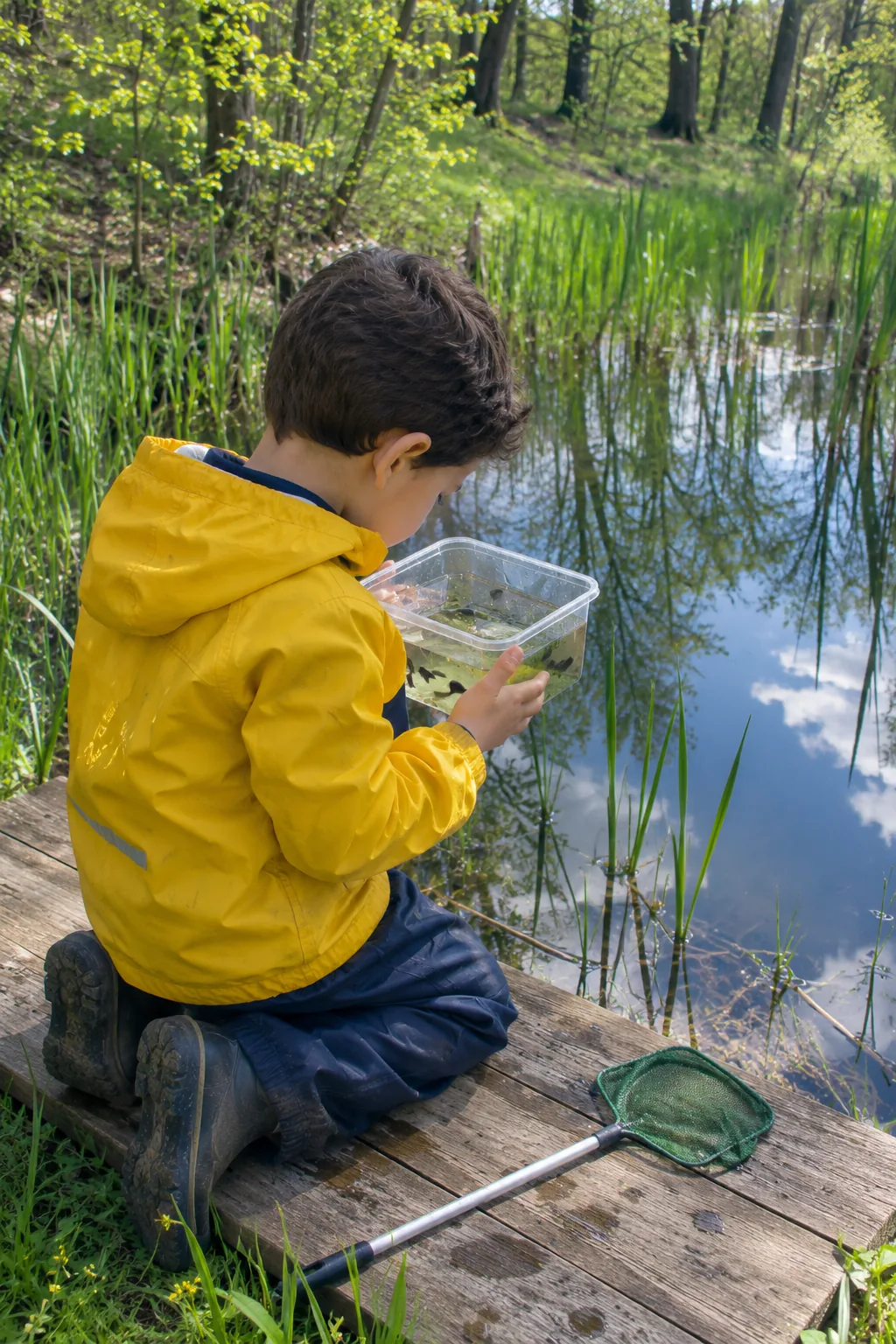
In March the ground thaws and the garden is ours again. Spring is when we observe the most: we photograph the same branch every week and count buds turning into leaves. Frog spawn in the pond becomes tadpoles and tadpoles become frogs; the children learn this change not from a book but from the tub in their own hands. Spring rain means mud; the rain suit matters as much as in autumn.
- Temperature6° / 22 °C
- Outdoors09:30–12:00 and 14:00–16:30
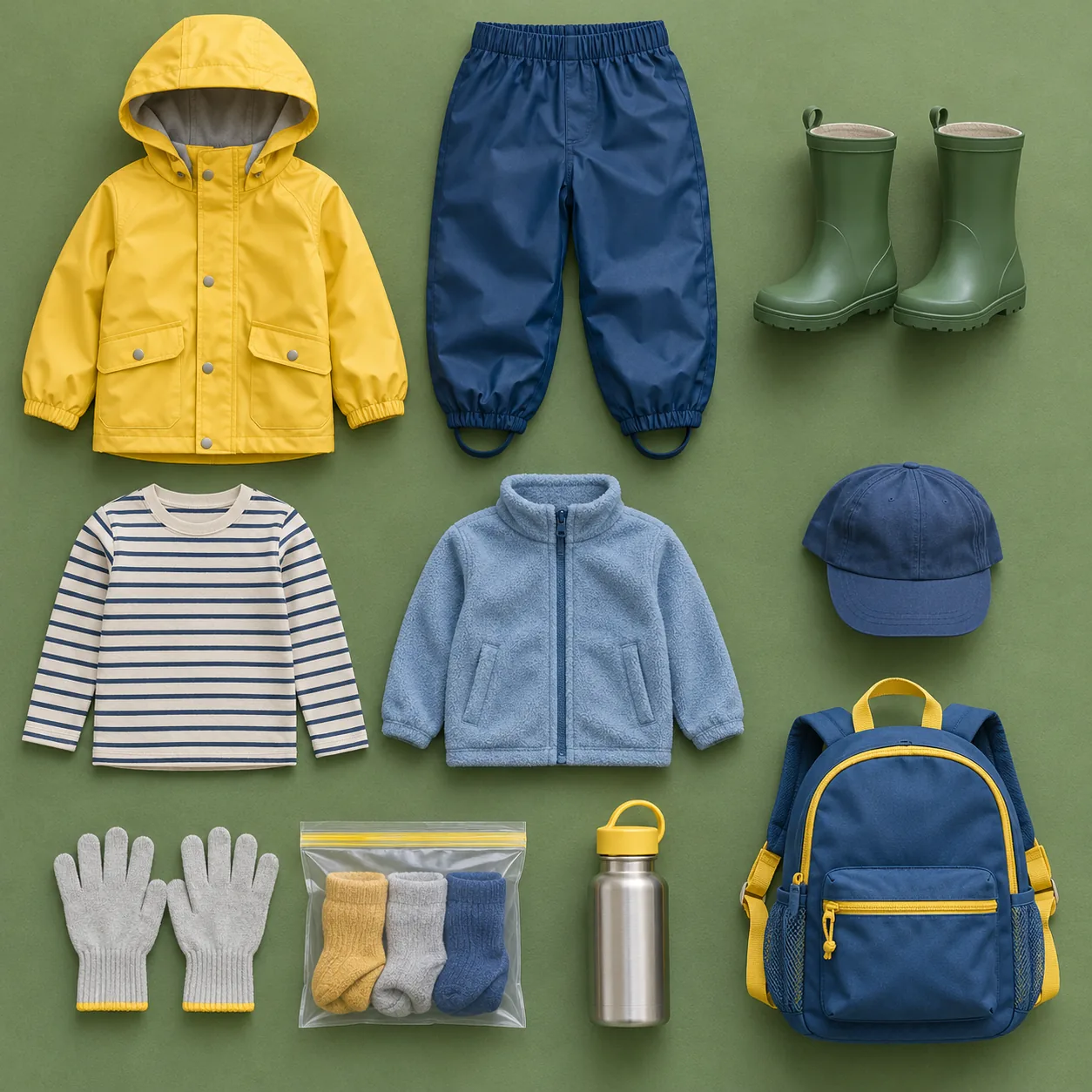
Mornings are still cool, noons mild; rain is frequent. Rain trousers, a light fleece and a hat should be in the bag.
Spring in the forest
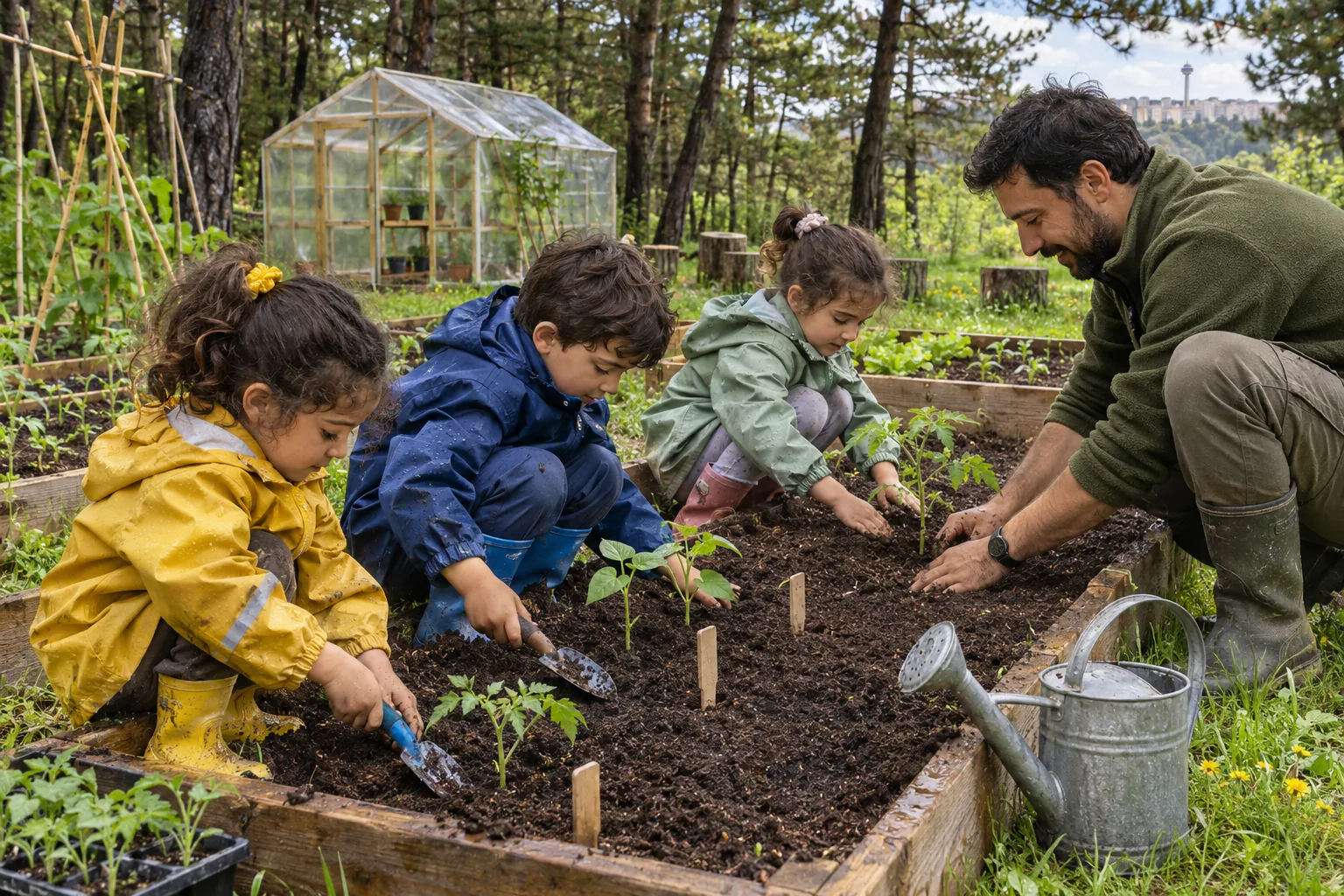
- Planting dayWe plant tomato, bean and squash seedlings in our own bed.
- Pond watchWe scoop tadpoles into a tub, look through a magnifier and put them back.
- The same branchEvery Monday we photograph the same branch and count its buds.
- Bug hotelsWe build insect houses from reeds and cones and watch who moves in.
- Flower mapWe mark where the chamomile and poppies bloom on our map of the grounds.
- Birds returnWe listen to swallows and starlings and learn to tell their calls apart.
The Spring bag
- Light fleece
- One-piece rain suit
- Rubber boots
- Wide-brimmed hat
- Children's sunscreen
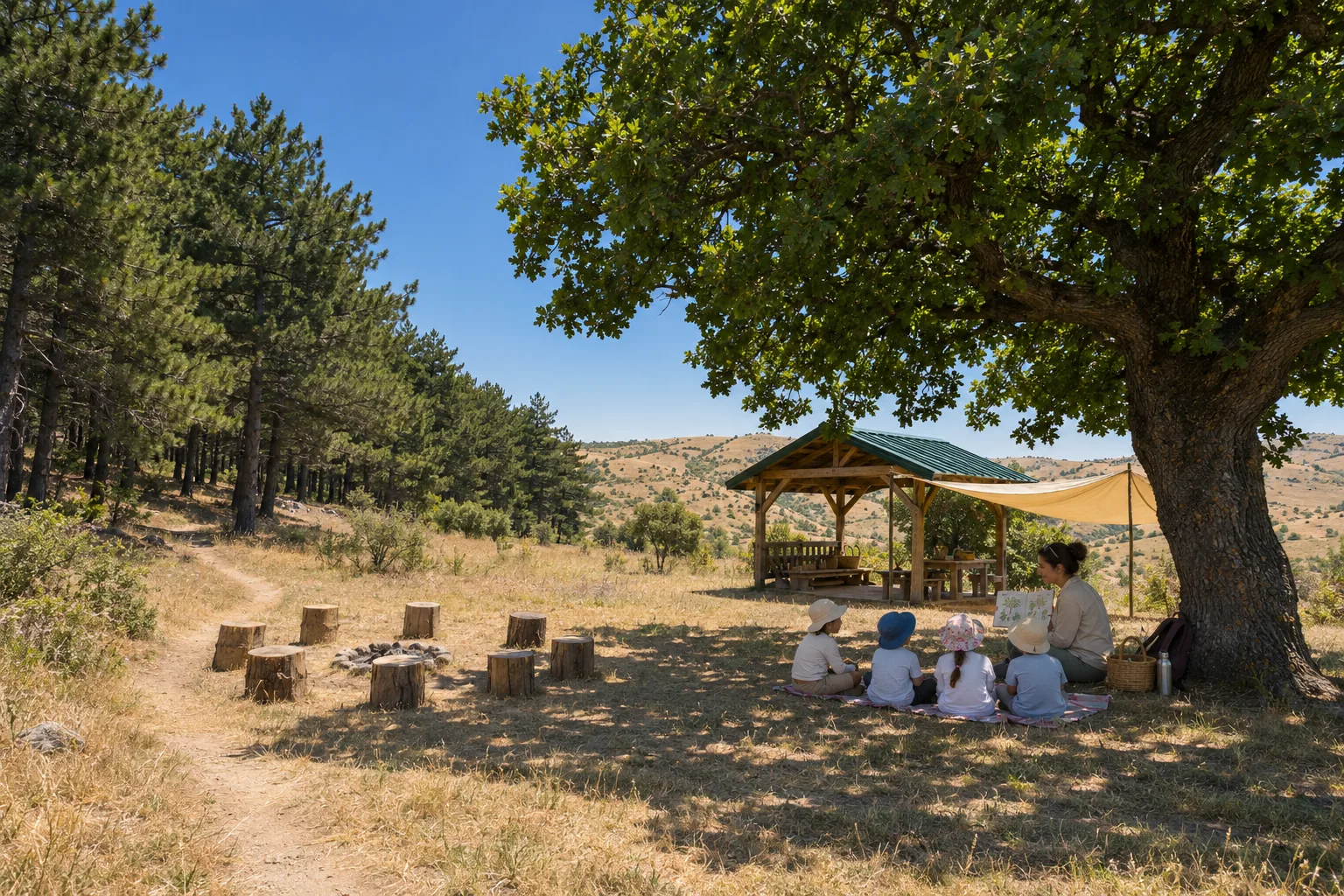
Stories in the shade, dams in the stream and thyme-scented steppe.
In June the school year ends and summer school begins. Ankara summers are hot and dry, so the summer programme is built around the clock: long walks in the cool of the morning, quiet work indoors or in the oak's shade at midday, stream and water play towards late afternoon. The steppe smells of thyme and lavender in summer; the children learn to recognise plants by smell.
- Temperature14° / 33 °C
- Outdoors08:45–11:30 and 15:30–16:30
Above 30 °C we are in the shade or indoors between 11:30 and 15:30. A wide-brimmed hat, thin long sleeves, sunscreen and a full water bottle are a must.
Summer in the forest
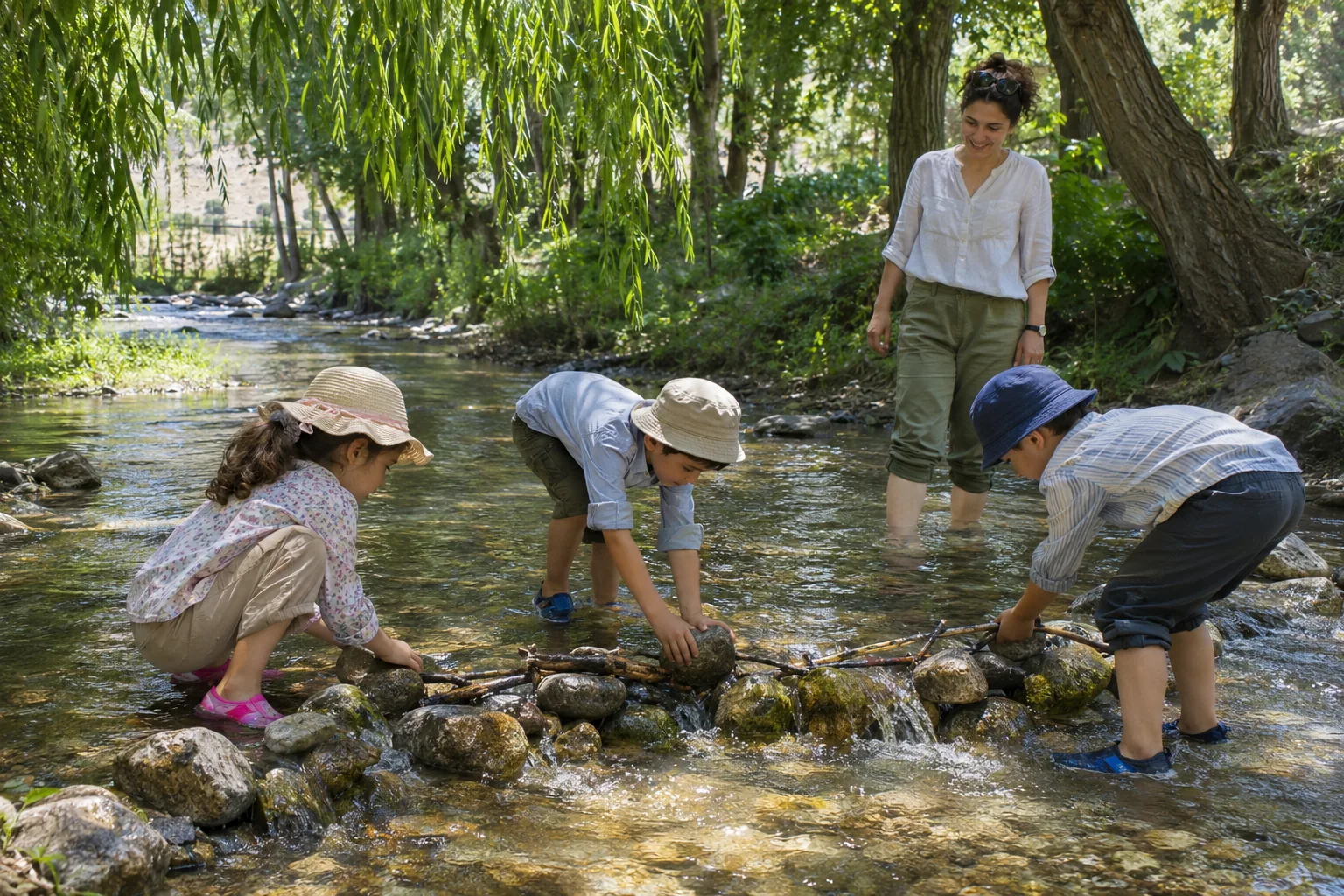
- Stream damWe build a dam of stones and sticks in the ankle-deep stream.
- Shadow mapHour by hour we mark where the big oak's shadow moves.
- Scent walkThyme, sage, mint: we learn steppe plants by smell.
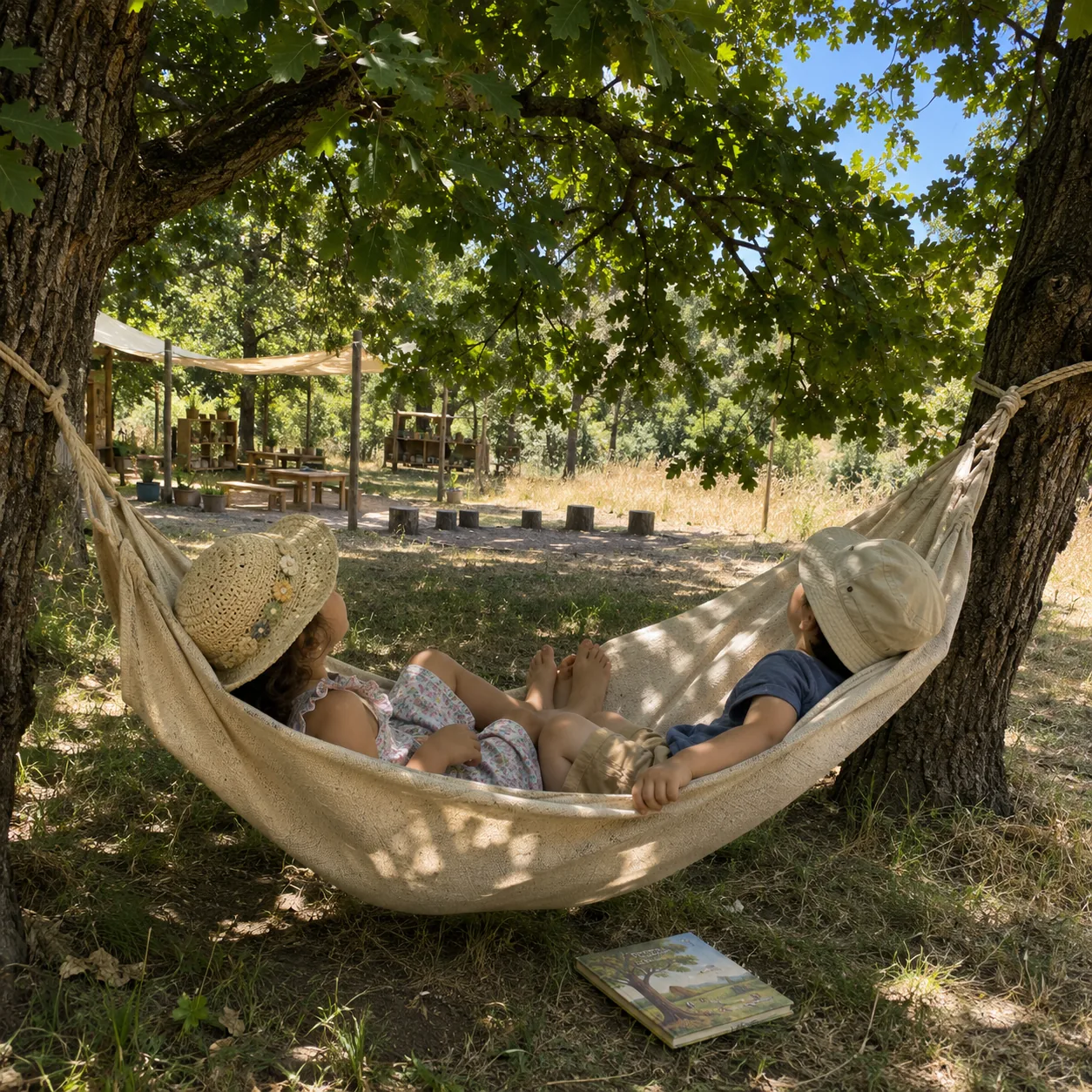
- Hammock storiesA hammock and an audiobook in the shade during the midday heat.
- SundialWe build our own sundial from a stick and stones.
- Star nightIn the last week of summer school, a night-sky evening with families.
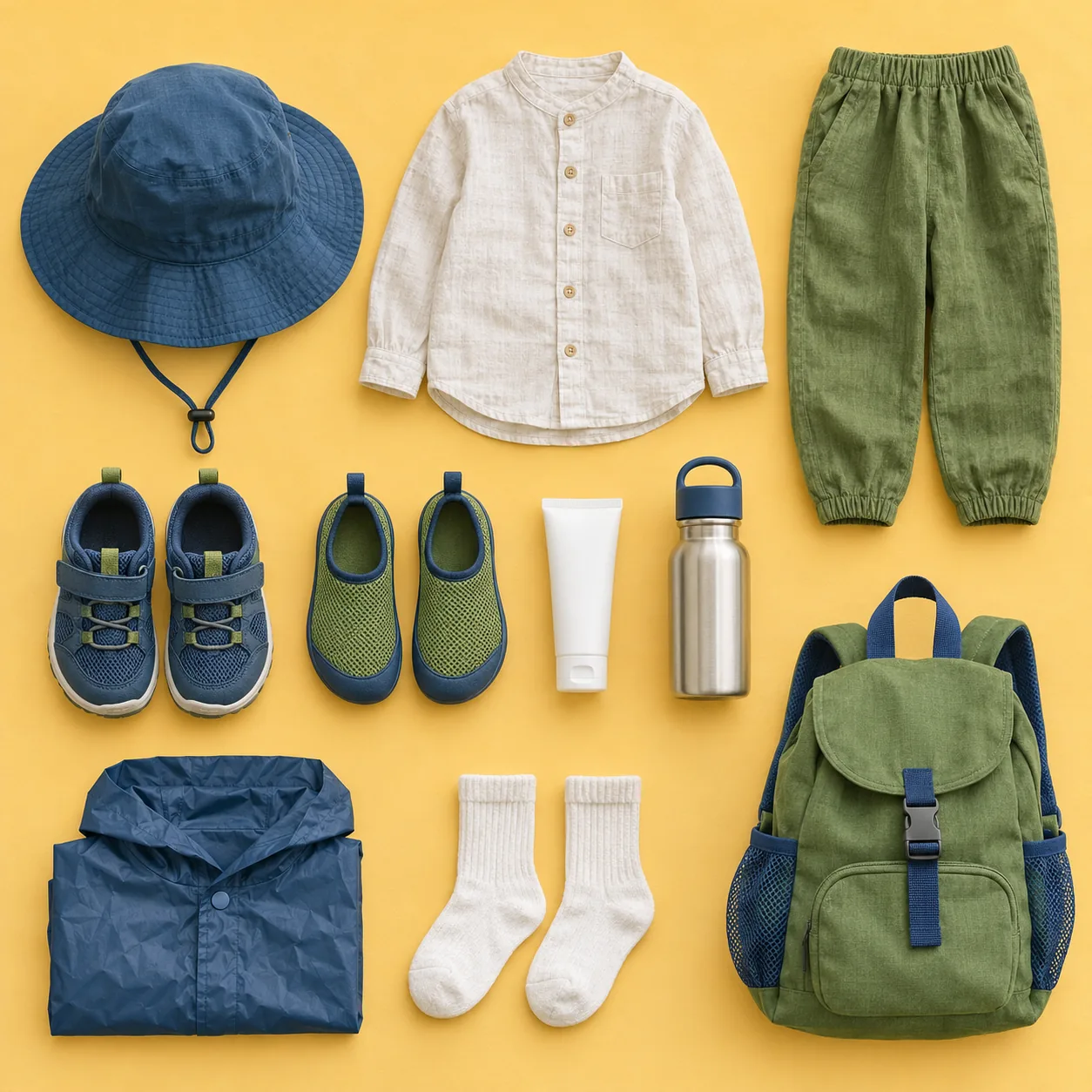
The Summer bag
- Light, pale long-sleeved shirt
- Packable rain poncho
- Closed-toe trainers
- Wide-brimmed hat
- Children's sunscreen