Every season,
half the day in the forest.
A licensed kindergarten for ages 3–6 at the forest edge in İncek, Ankara. There is no bad weather, only the right clothes.
The school year, September to August
In the forest this season
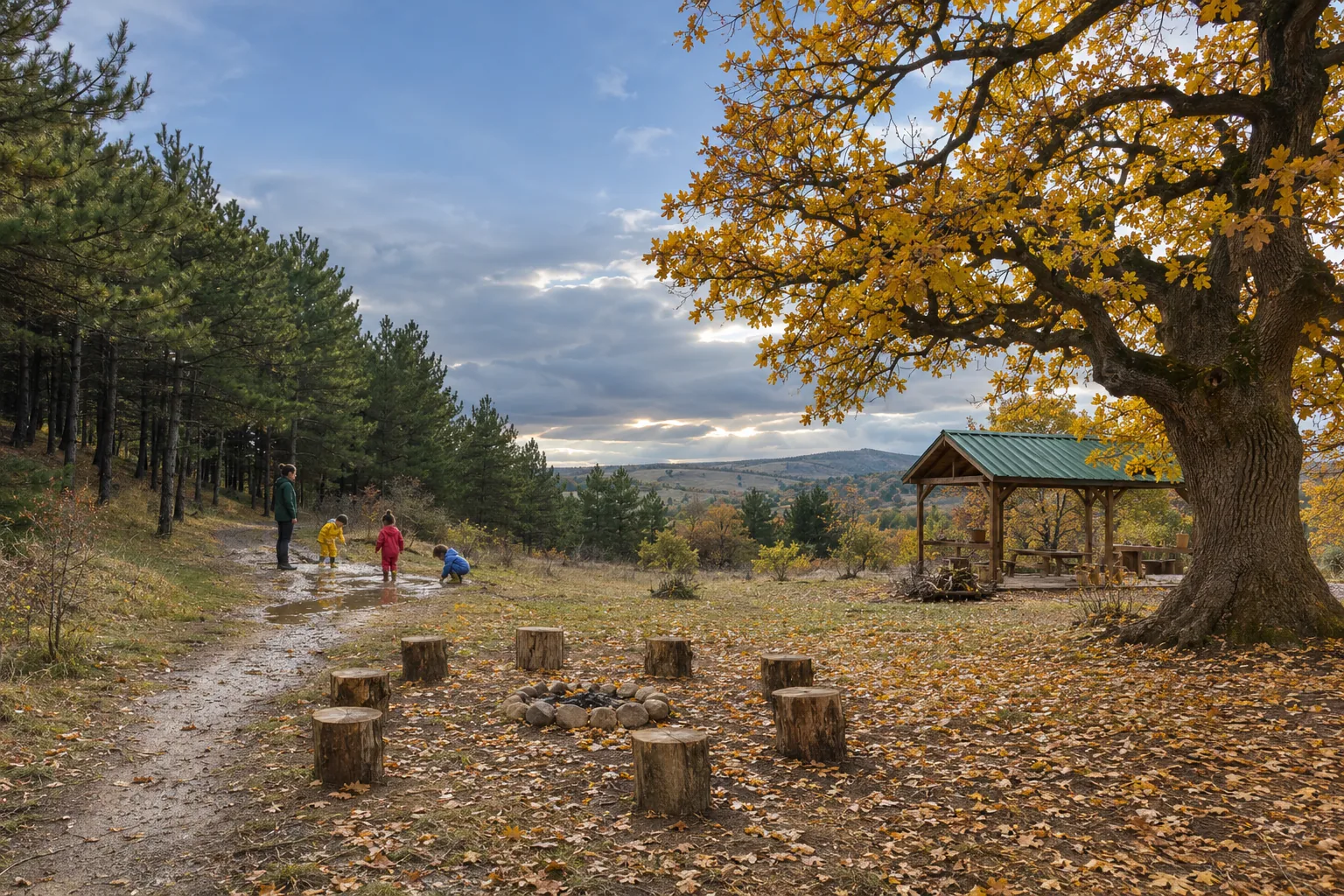
Autumn
Leaves, the first rain and mud at its finest.
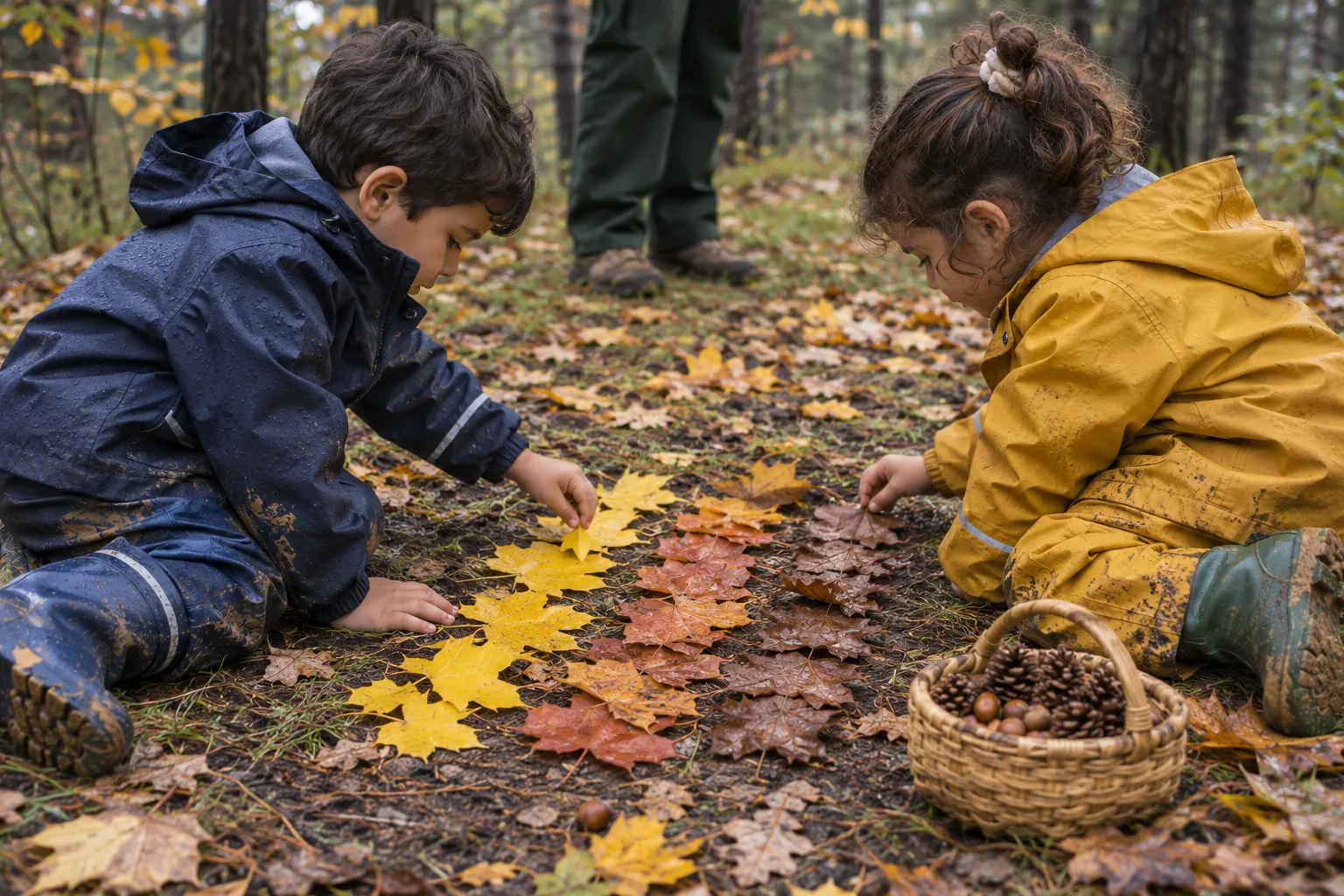
The school year starts in autumn and the forest opens its door at its most generous. The oak turns gold, cones gather under the black pines and after the first rain the path fills with puddles. In September the groups get to know the grounds: which tree we gather under, where the boundary is, what we do when we hear the whistle. By November the children put on their rain suits and take off their boots by themselves.
All four seasons- Leaf archiveWe sort leaves by colour and shape, dry them and build our own archive.
- Puddle scienceWhich puddle is deeper? We measure with sticks, throw stones and count the rings.
- Cone countWe collect black pine cones and lay them out in groups of ten.
- First fire circleAround a small fire lit by a teacher we learn safe distance; linden tea brews.
In the forest this season
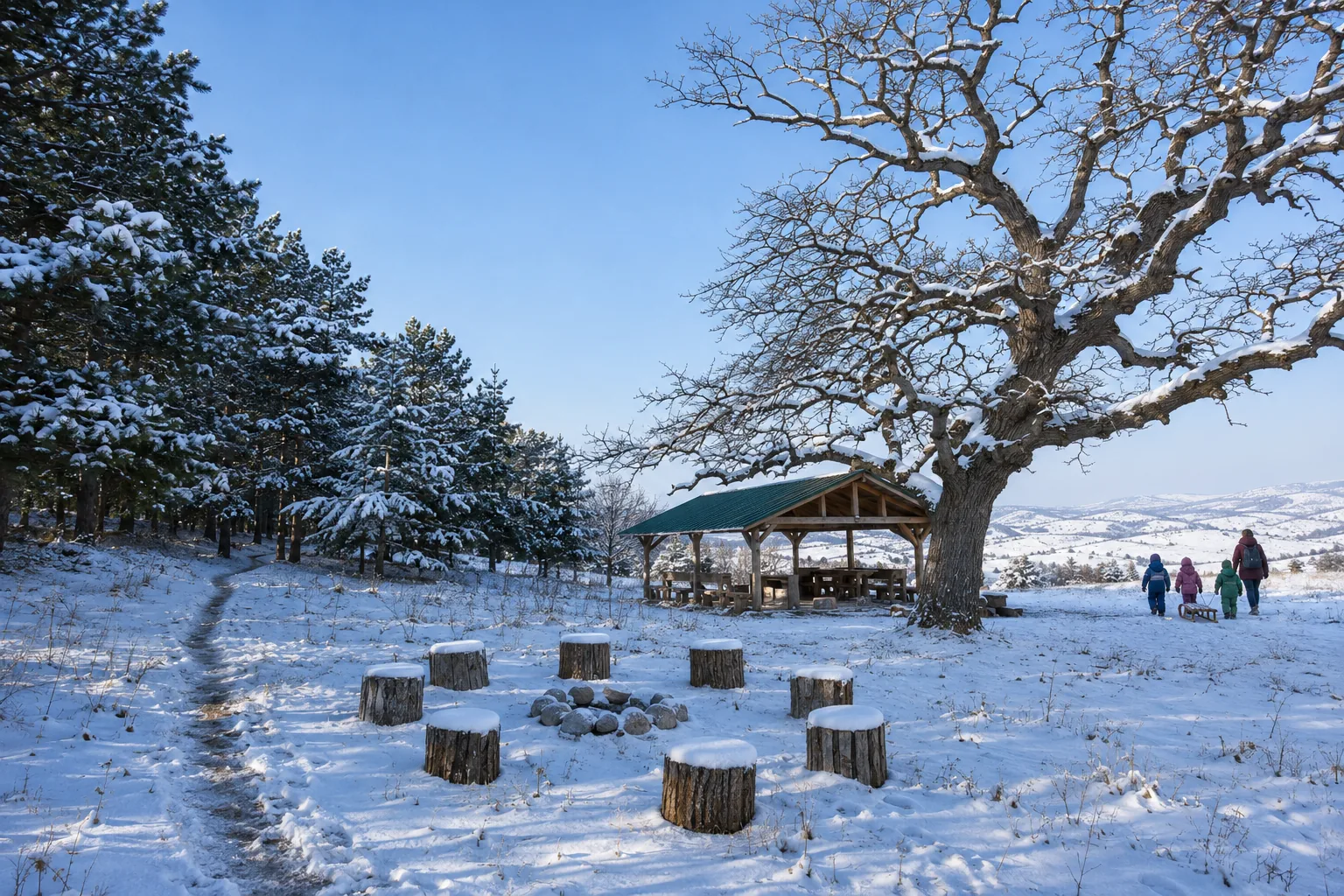
Winter
Tracking in the snow, steaming linden tea and long shadows.
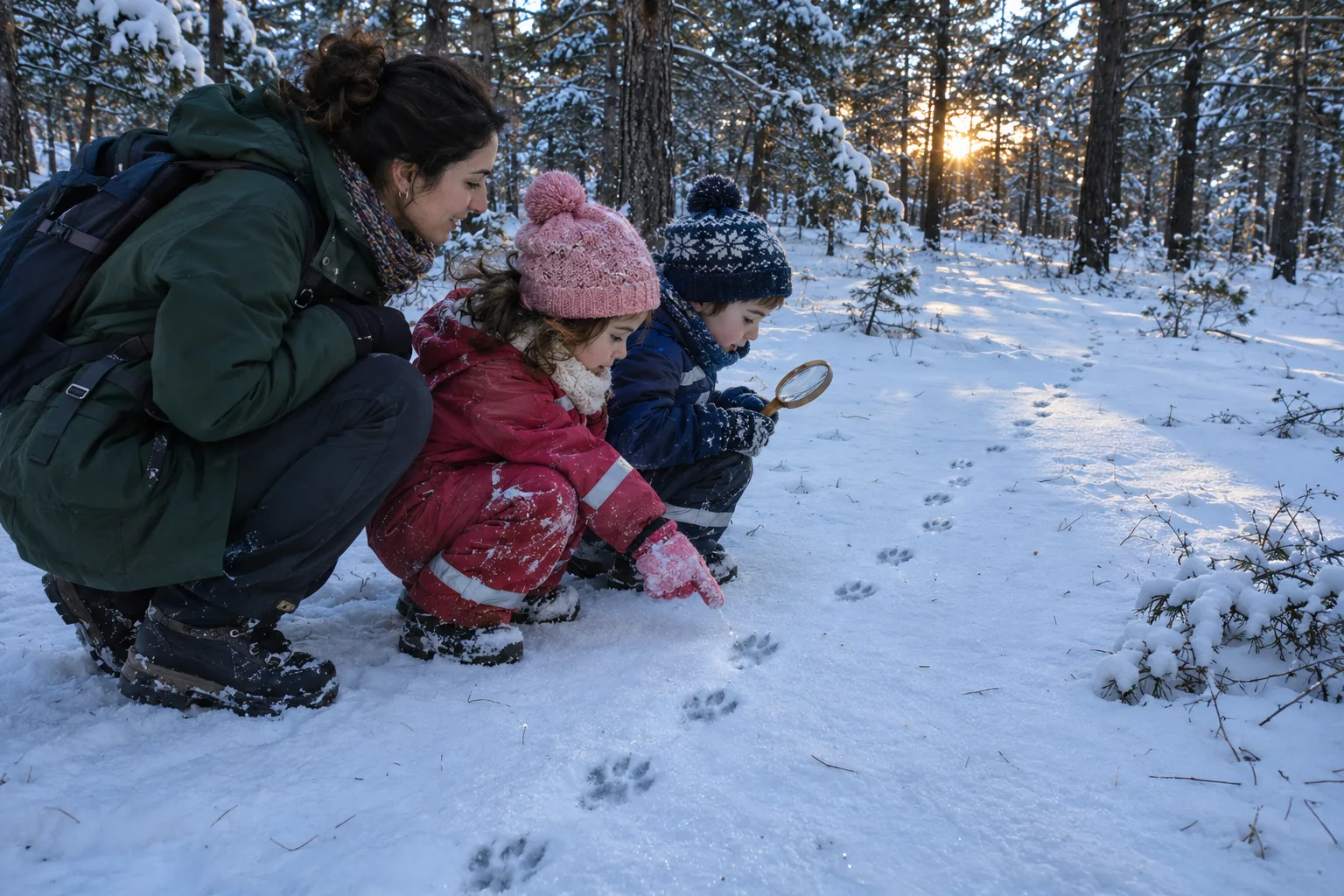
Ankara's winter is dry and cold; when it snows the forest falls silent and every track becomes readable. In winter we adjust our time outside to the weather: on a sunny, still day we are out until noon; when the wind chill nears minus ten we do short rounds and warm up in the shelter. What winter really teaches is listening to your body: a child who is cold learns to say so, and a teacher learns to ask.
All four seasons- TrackingFox, hare, crow: we work out whose tracks are in the snow and follow them.
- Ice experimentsWe leave water in a tray overnight; coloured ice shapes swing from branches.
- Sledge slopeOn the slope behind the school, one at a time, with a teacher watching.
- Stories in the shelterLinden tea and a long story under the tarp while snow falls outside.
In the forest this season
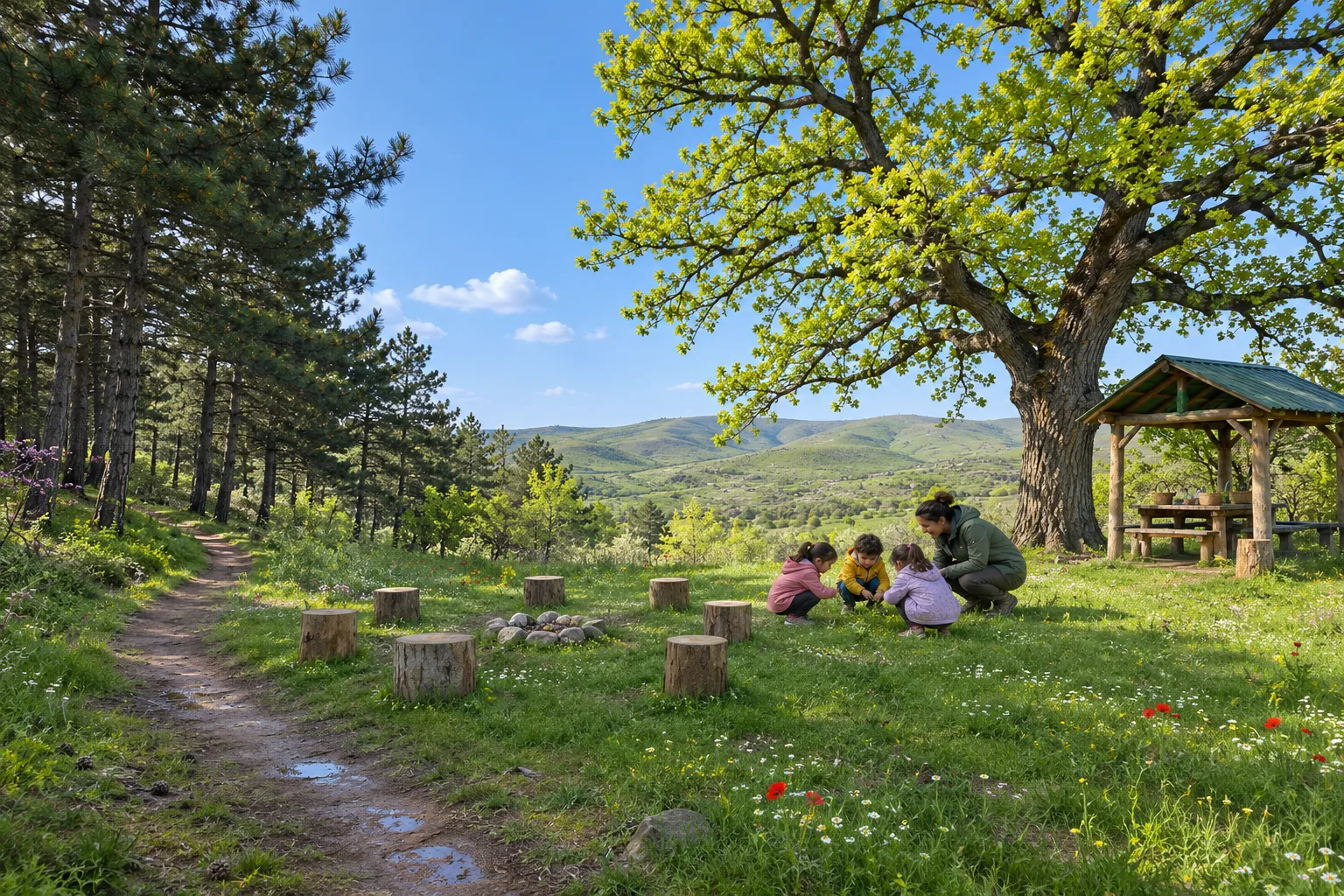
Spring
Seedlings, tadpoles and days that grow a little longer each day.
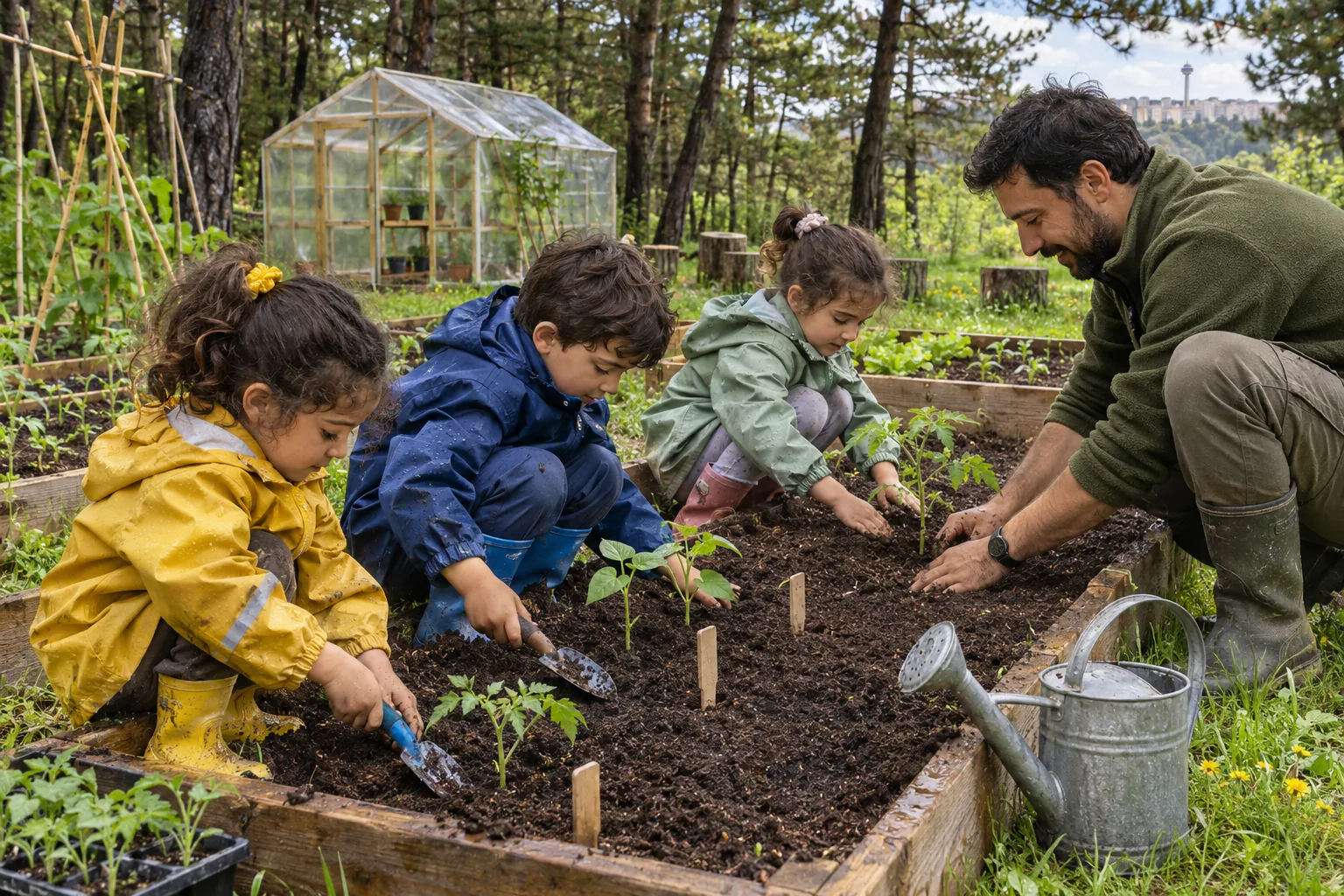
In March the ground thaws and the garden is ours again. Spring is when we observe the most: we photograph the same branch every week and count buds turning into leaves. Frog spawn in the pond becomes tadpoles and tadpoles become frogs; the children learn this change not from a book but from the tub in their own hands. Spring rain means mud; the rain suit matters as much as in autumn.
All four seasons- Planting dayWe plant tomato, bean and squash seedlings in our own bed.
- Pond watchWe scoop tadpoles into a tub, look through a magnifier and put them back.
- The same branchEvery Monday we photograph the same branch and count its buds.
- Bug hotelsWe build insect houses from reeds and cones and watch who moves in.
In the forest this season
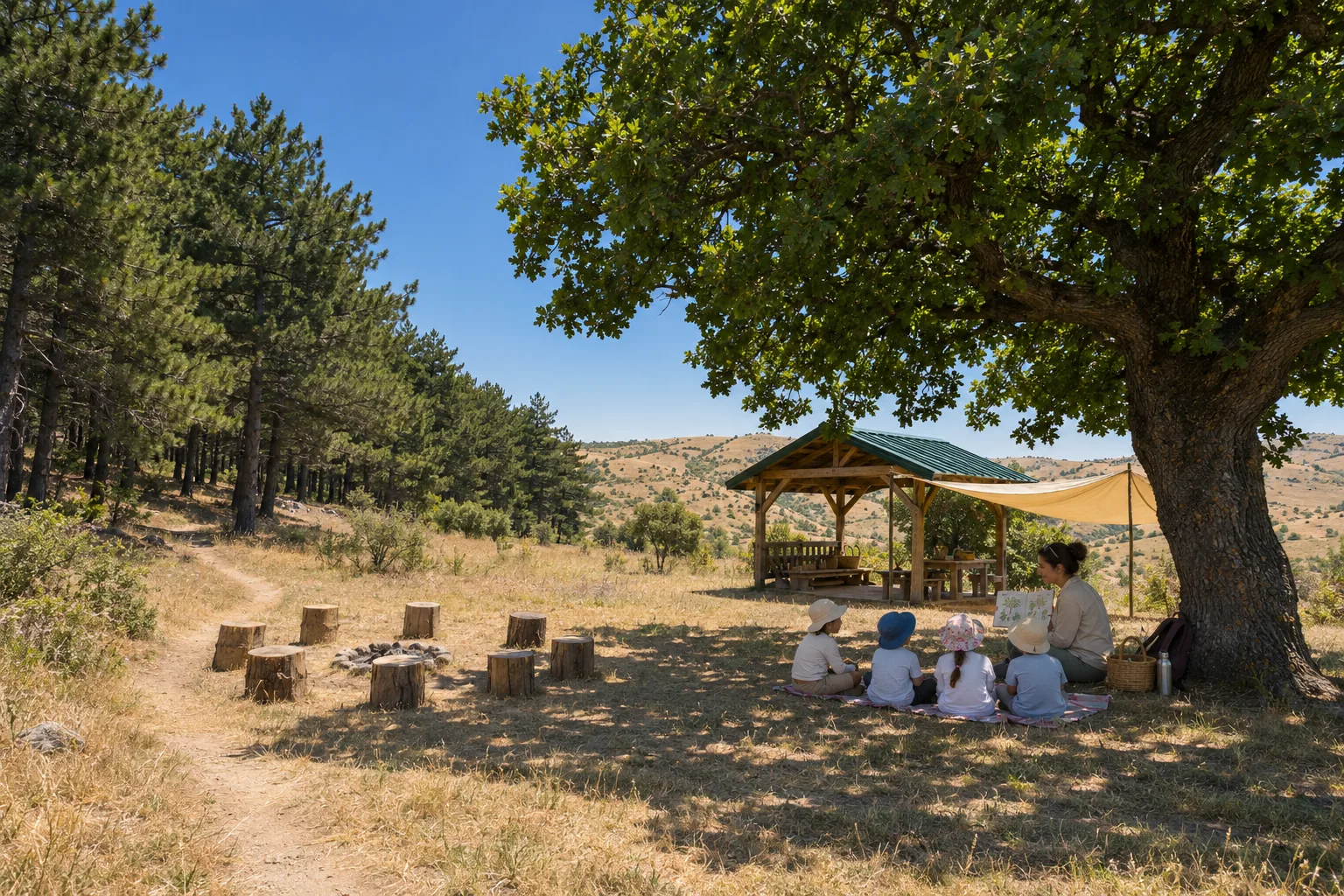
Summer
Stories in the shade, dams in the stream and thyme-scented steppe.
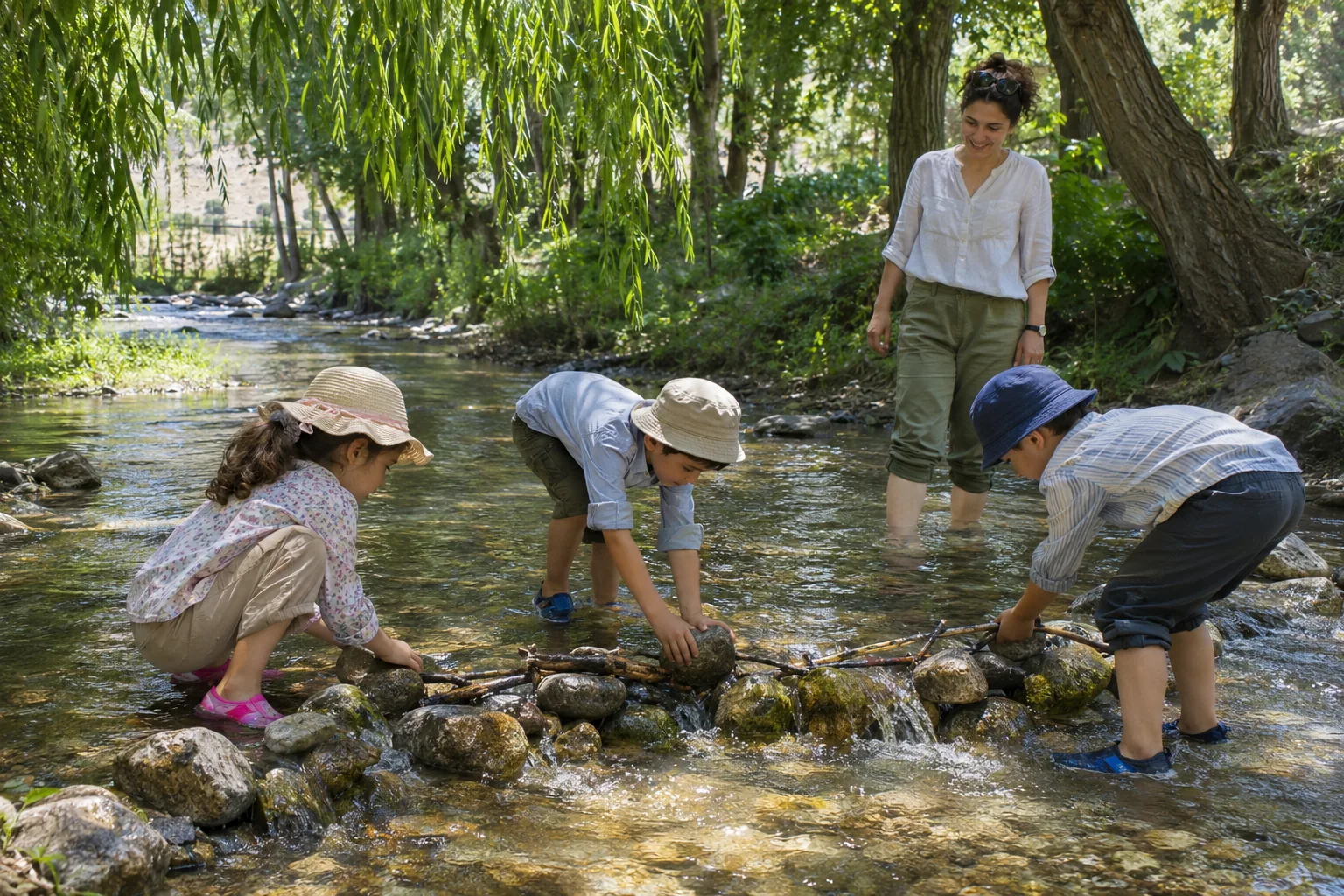
In June the school year ends and summer school begins. Ankara summers are hot and dry, so the summer programme is built around the clock: long walks in the cool of the morning, quiet work indoors or in the oak's shade at midday, stream and water play towards late afternoon. The steppe smells of thyme and lavender in summer; the children learn to recognise plants by smell.
All four seasons- Stream damWe build a dam of stones and sticks in the ankle-deep stream.
- Shadow mapHour by hour we mark where the big oak's shadow moves.
- Scent walkThyme, sage, mint: we learn steppe plants by smell.
- Hammock storiesA hammock and an audiobook in the shade during the midday heat.
There is no bad weather.
Only the right clothes.
Yaban has 3 groups, each with at most 14 children and two teachers. About 48% of the school day is spent outdoors, in rain, snow or wind.
We talk about things not in a classroom but where the question comes up: at the edge of a puddle, over a track in the snow, beside the seedling bed. The outcomes of the Ministry of Education Preschool Programme are worked on here too, through real tasks.
Our approach and safetyThree groups, three paths
The groups are named after winds. As children grow, the path gets longer; each card shows the daily walk of that group.
 MeltemAge 3–4 (36–48 months)
A first meeting with the forest: slow, safe and full of play.
14 children · 2 teachers · 600 m daily walk
 PoyrazAge 4–5 (48–60 months)
The path gets longer, the questions deeper.
14 children · 2 teachers · 1.2 km daily walk
 KarayelAge 5–6 (60–72 months)
Ready for primary school: a long road, big responsibility.
14 children · 2 teachers · 2.4 km daily walk
Groups are formed by age; for siblings and children on the age boundary we decide together at the enrolment meeting.
A day, stop by stop
The school day is 8:00 hours; 3:52 of it is spent outdoors. Four stops of the day:
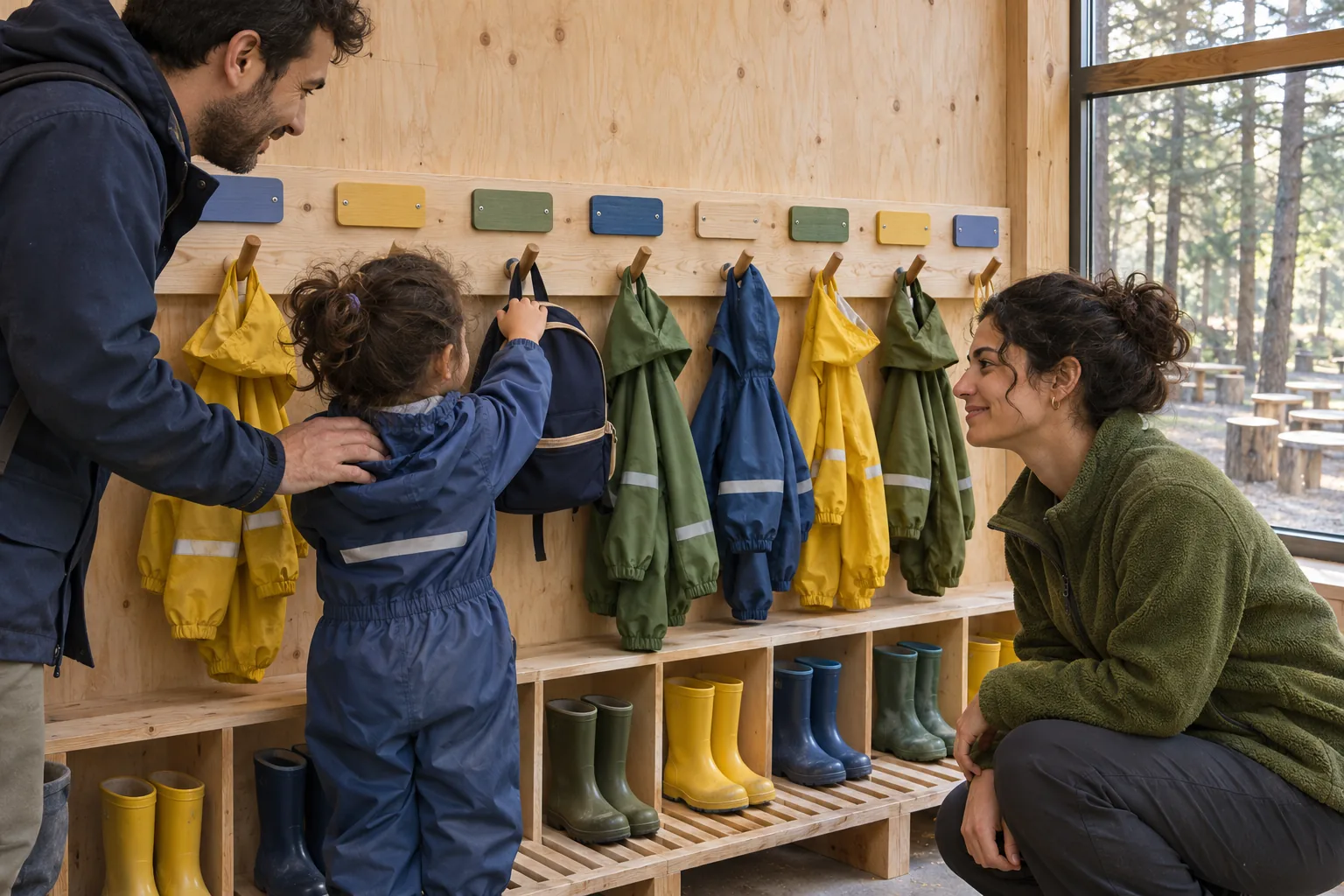
08:30Welcome and the mud room
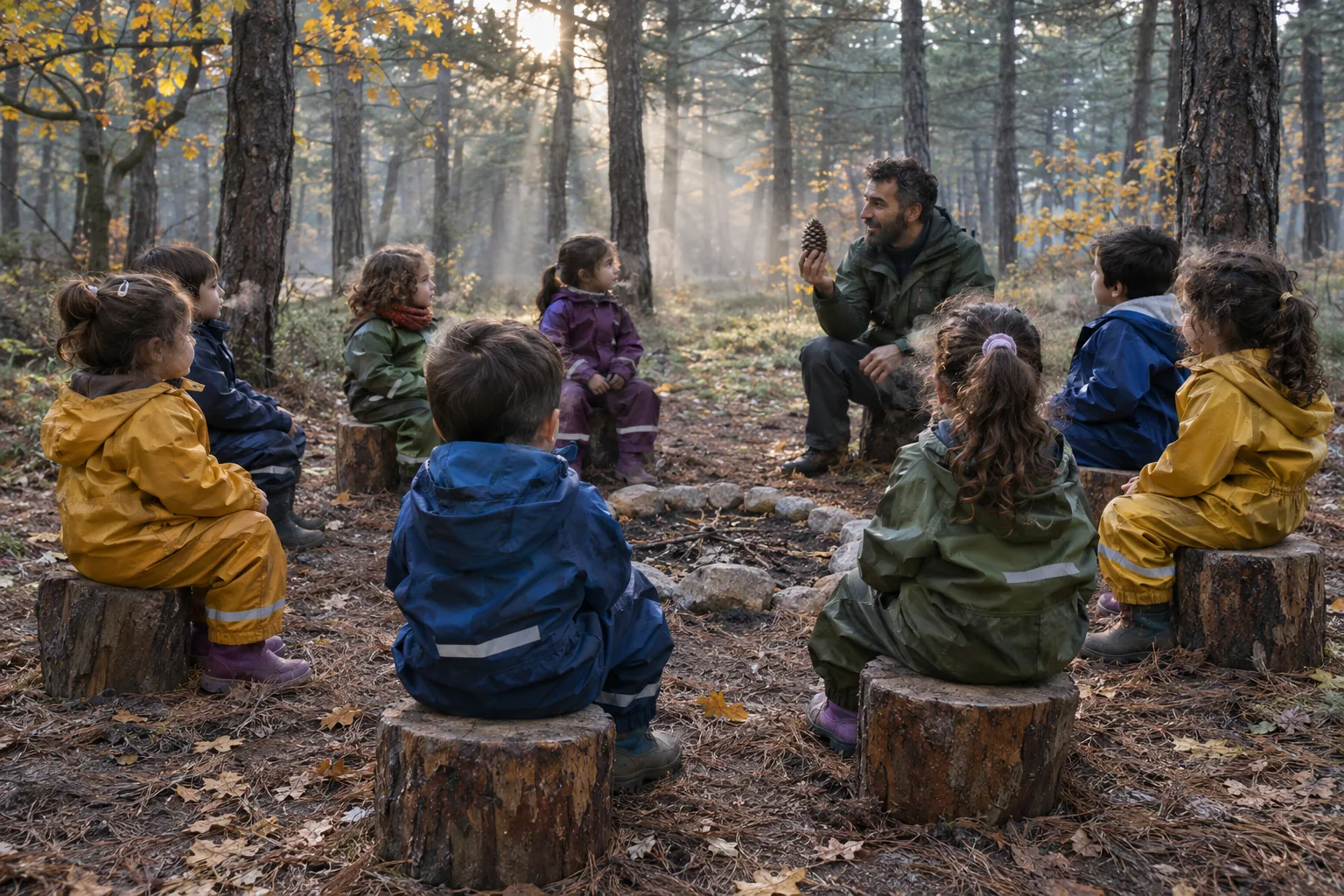
09:30Morning circle
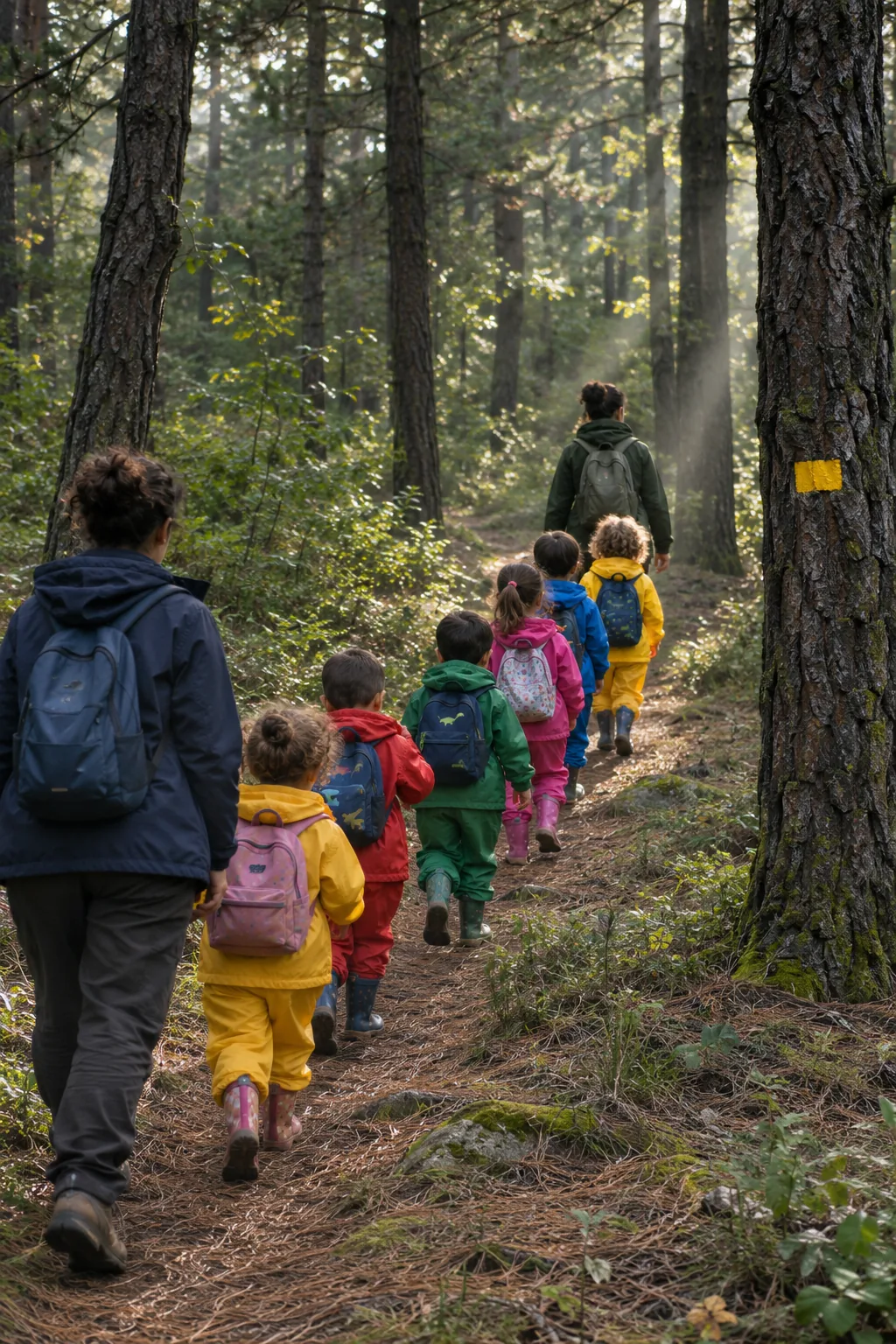
10:00Forest time
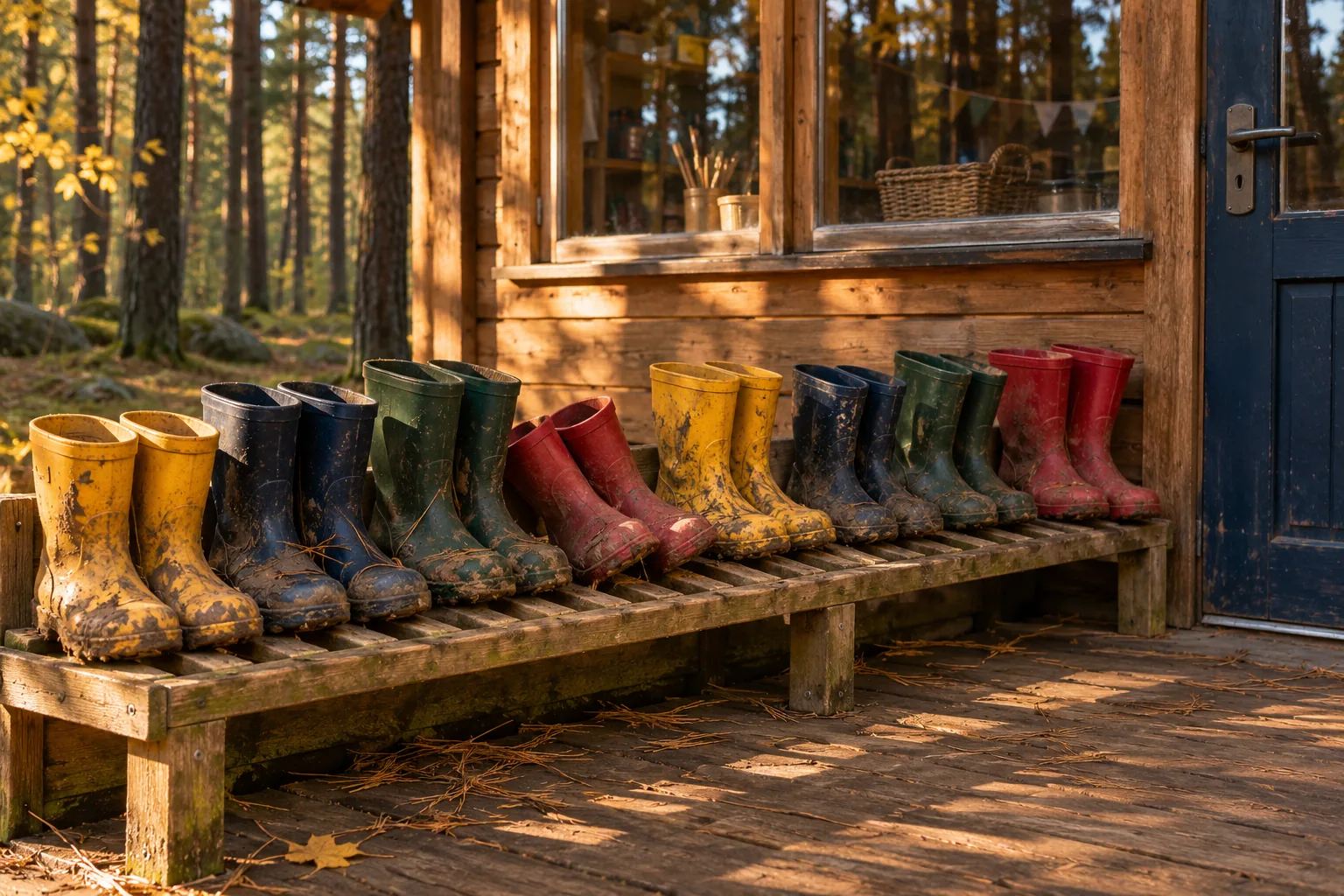
15:45Free play and goodbye
Who is in the forest?
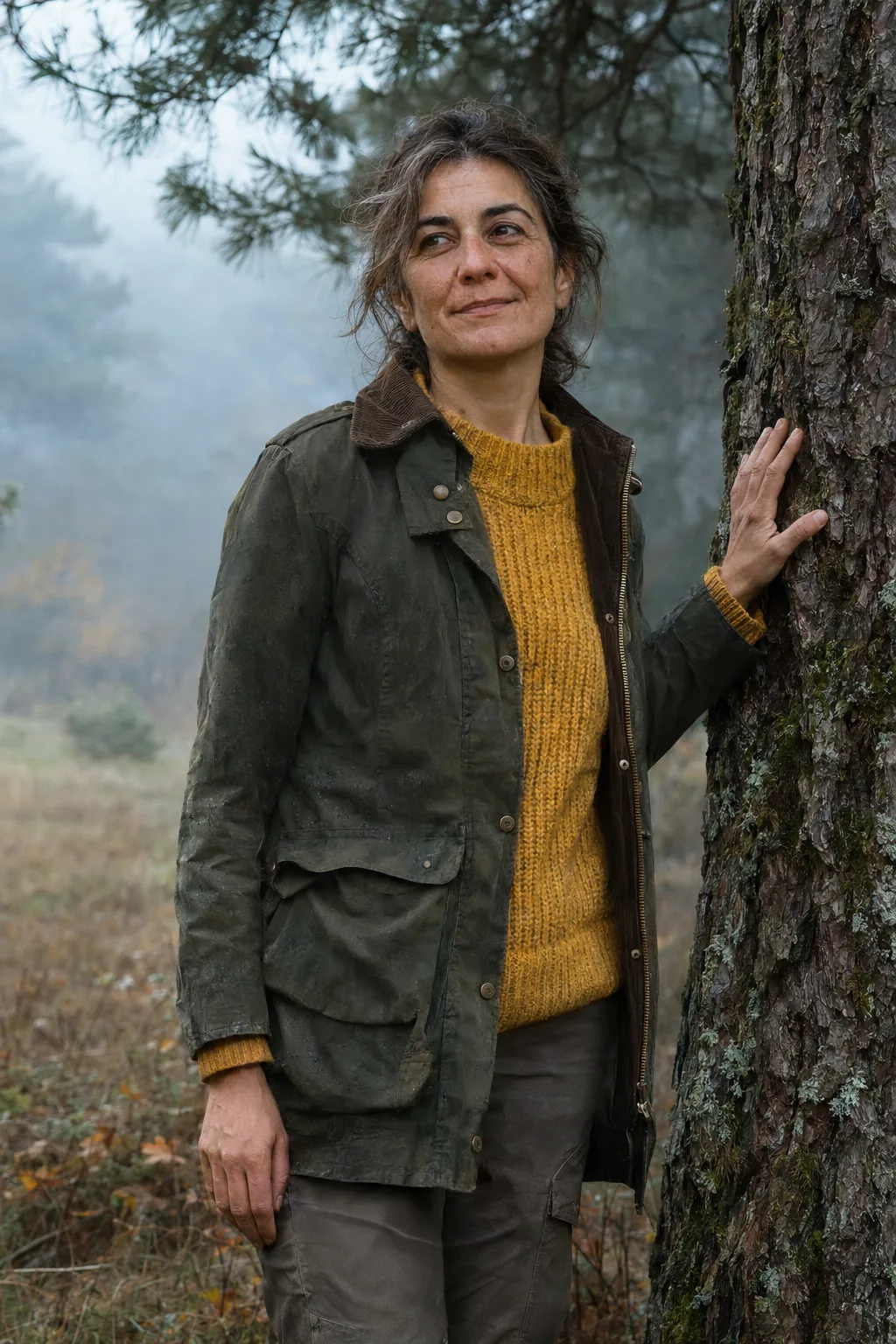
Watching children look out of the classroom window, I kept asking myself the same thing: why don't we take the lesson out there? Yaban is the answer to that question.
Özge IlgazFounder and head of school
 Ece DemirtaşMeltem
 Burak ÖnalMeltem
 Selin KaracaPoyraz
 Mert AydoğduPoyraz
 Zeynep UluçKarayel
 Kerem TokKarayel
Writing for parents
 There is no bad weather: a short guide to dressing children in layers
The question we hear most at forest school is "what should I dress them in?". The three-layer rule, why cotton chills, and fixing the small crises at the door at 08:15.
 Why does risky play matter? Walking on logs, climbing trees and safety
Wait a minute before saying "they'll fall!". Why children need a little risk to learn their own limits, and how we tell risk from hazard at school.